
National AFL men‘s draft exposes a system that is being undermined
The draft is meant to be the AFL’s great equaliser. The more it’s undermined, the more the league risks clubs withering at the vine, writes DANIEL CHERNY.

There is a perennial push for AFLW to become more like the AFL.
But as one veteran football official quipped in recent days, at the moment, the men’s league is becoming more like the women’s competition in at least one respect.
Because as AFLW grapples with a way to manage the inequities stemming from a state-based draft system, the integrity of a male national draft – almost four decades old – feels as undermined as ever.
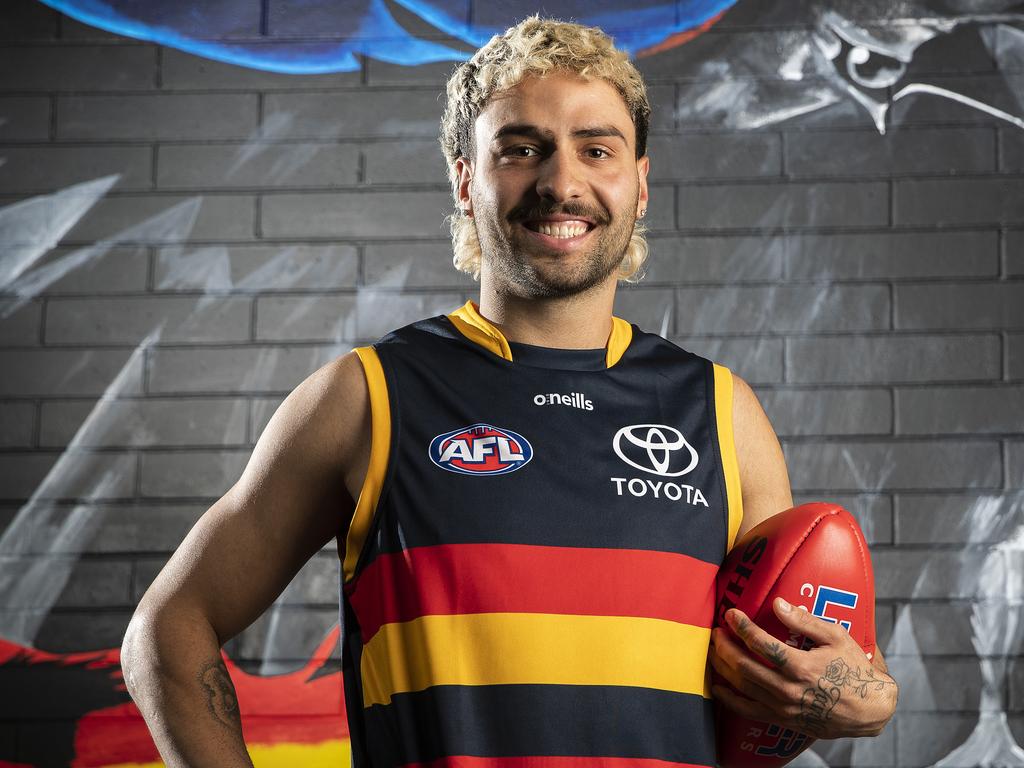
Monday was a watershed day for the national competition, and not in a good way. Inside the space of a few hours, three top-three picks from the last four national drafts were traded back to their respective hometowns. Izak Rankine, pick No.3 in 2018, moved from Gold Coast to Adelaide. Luke Jackson, pick three the following year, was traded from Melbourne to Fremantle. And of course, Jason Horne-Francis, at North Melbourne for less than a year after being drafted at pick No.1 in 2021, traded to Port Adelaide on a six-year deal.

There were no pleasantries directed his way in the Kangaroos’ press release marking the four-club “mega trade” which sent the powerful midfielder to the Power. And a series of thinly-veiled social media comments from North forward Cameron Zurhaar suggested Horne-Francis, officially a Shinboner forever, will not be welcome back at Arden Street any time soon.
Now of course, none of these players headed home for free. While it can be argued for days whether club x paid overs or unders for player y, there was consideration in each instance. The go-home factor at least keeps the AFL player movement industry ticking along for close to 12 months a year, offering seemingly endless hypotheticals and early draft pick boosters for clubs who lose players.
Monday’s moves meant that a top three pick from five of the last six national drafts has been traded interstate to a club in his home city. Along with Rankine, Jackson and Horne-Francis, there is Adam Cerra – pick No.5 in 2017 – traded from the Dockers to Carlton last year, and Tim Taranto – pick No.2 in 2016 – who last week moved from Greater Western Sydney to Richmond. As mentioned plenty of times previously, clubs like the Dockers get both the good and bad ends of the go-home stick, while the likes of the Giants and Suns are largely stitched up by the fact there are few players from their respective regions on AFL lists.
There was another less obvious example of the go-home factor at work on Monday. That GWS traded up to pick No.1 as part of the Horne-Francis trade – also involving Port and West Coast – was to a significant degree a result of the Giants’ desire to land Aaron Cadman in that pick. The widespread expectation is that GWS will do just that.

Cadman ticks a lot of boxes. As an athletic key forward he’s been likened to Jeremy Cameron, and the Giants – who once boasted Tom Boyd, Jonathon Patton, Cameron, Rory Lobb and Cam McCarthy on their list – are now in desperate need of support for Jesse Hogan. (Incidentally most of these players ended up being traded to their home states too.) GWS have in recent years kept picking midfielders with their early selections, most recently Finn Callaghan last year. It was high time they went tall, and after a poor year on-field, this was a chance for the Giants not to squander the opportunity.
But there is another reason Cadman ticks a box. He’s from Darley, an hour out of Melbourne. He’s not a bona fide country bumpkin, but he played this year for a regional NAB League team and realistically would likely move away from his family regardless of where he is drafted, unless he wants to spend two hours a day in the car.
In any case he is considered much less of a flight risk than several of the players that could have slipped to them had they retained pick No.3, which would likely have become No.4 once the Brisbane Lions matched a bid on father-son nominee Will Ashcroft.

Midfielders George Wardlaw and Elijah Tsatas, and medium forward Harry Sheezel are all Vic Metro boys, and all considered by some interstate clubs to be particularly vulnerable when it comes to the go-home factor. Midfielder Jhye Clark, from Geelong, is another about whom there are concerns in this area. And there is a long recent track record of players wanting to go home to Geelong.
Officially, the Eagles were not perturbed by the prospect of the go-home factor when they parted ways with pick No.2 as part of the mega trade. But that West Coast traded back to an area of the draft where the pick of the WA talent is likely to be available, does not look like a coincidence to other clubs.
All in all it puts a dampener on the ideals of a national draft. Yes, some top picks end up staying. Matt Rowell, Noah Anderson and Ben King have committed to the Suns for now. But it took the exceptional circumstances of best mates Rowell and Anderson being drafted together to the club to boost Gold Coast‘s belief they would stay long-term.
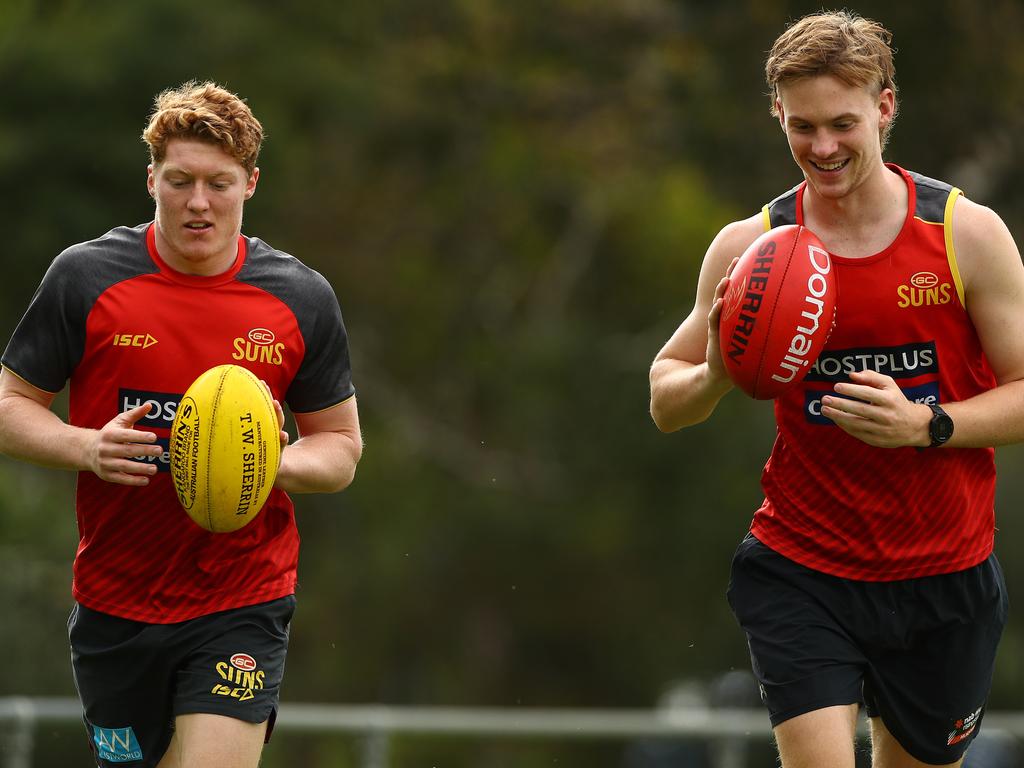
The goal of the draft is equalisation. And that every club bar Gold Coast and Essendon has won a final in the past decade shows the competition is far from the closed shop of top-flight European soccer leagues. But these trends have to be at least something of a concern for the league.
The idea of longer contracts for first-round draftees is not a new one but should again be seriously considered during collective bargaining agreement negotiations. The league is in a position of strength. There is more money on the table, and it has the chance to use that as leverage to better protect the integrity of the draft, which underpins the modern equalised competition. Nothing should be off limits when it comes to finding ways to address what is increasingly looking problematic.

Done deal? Crows could soon unveil new Nicks contract

Failed trade, TDK, hair cuts down the highway — Marshall opens up

The Newcastle club inspiring AFL dreams in NRL heartland

Top Crow reveals why Stevens got the nod as Roo’s replacement

‘S*** hit the fan’: Clarry breaks silence on Dees exit
