
Prejudice, conscription, umpiring: Glenn James on blazing a trail, long wait for another Aboriginal umpire
Glenn James is still the only known Aboriginal to umpire a VFL/AFL game. He tells SHANNON GILL about breaking down barriers, being honoured by the AFL and that signature wave.

Some 107,000 fans were packed into the MCG and Carlton and Richmond were stripped down to battle for the heavyweight title.
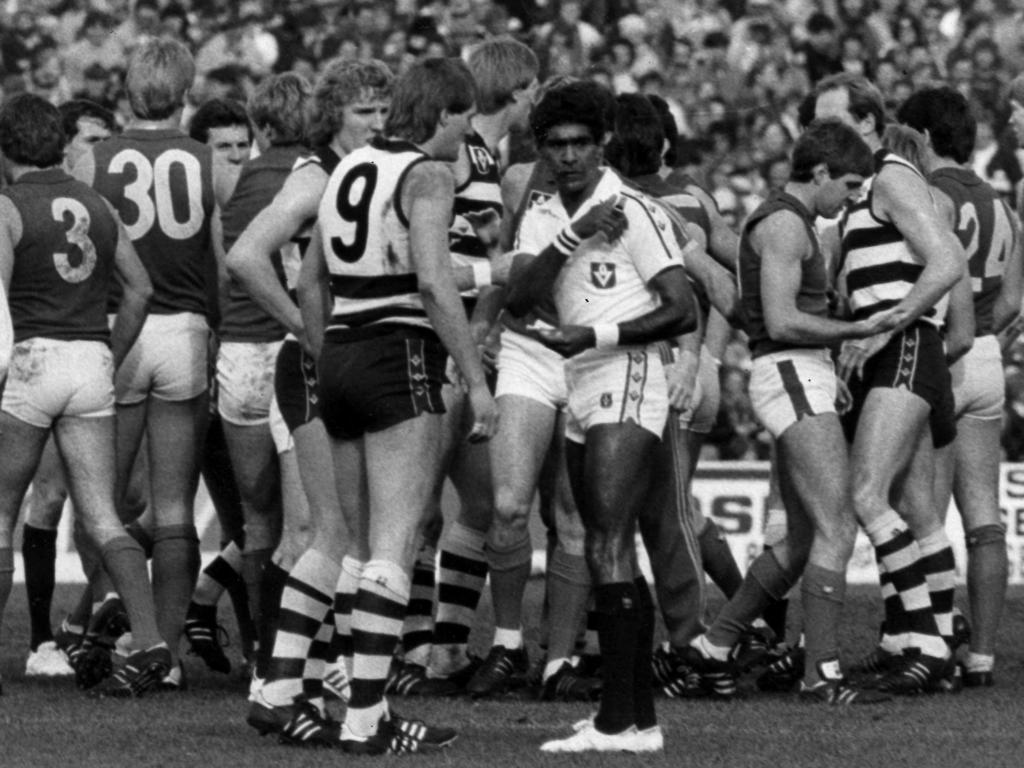
Amid all the tension that hung in the air for the 1982 VFL grand final, there’s the indelible image of the man in white holding the ball aloft smiling and waving before joyously bounding off to bounce the ball.
“I just let loose, I threw my hand in the air and did the bounce. I was just pumped about the whole situation,” says Glenn James, a Yorta Yorta man, who was, and still is, the only known Aboriginal man to umpire a VFL/AFL senior game.
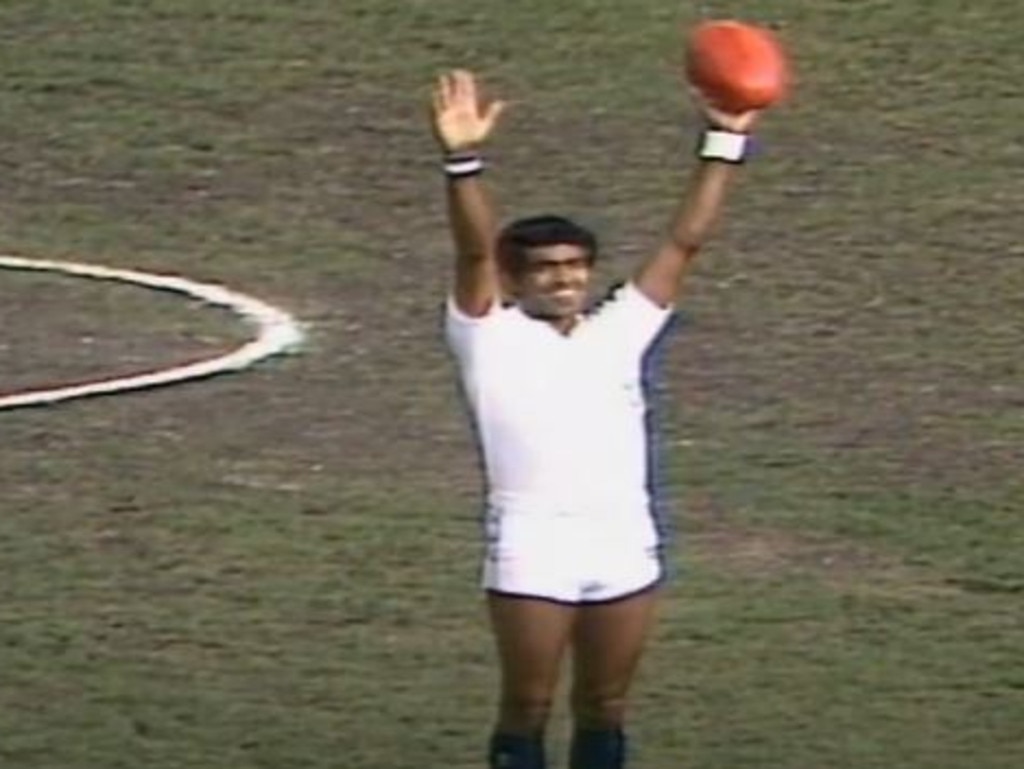
As well as being the only Aboriginal umpire, he’s the only umpire to wave to the crowd before every game.
“(Umpires coach) Bill Deller came up to me afterwards and said, ‘What’s all that about’. I said, ‘I’m here in this position so I’m going to do it and I’ll do it in my next grand final too’,” he tells CODE Sports.
“He said, ‘You mightn’t get one!’”
Essendon fans well know that James did indeed get another grand final. His signature wave opened their last quarter footballing nirvana of a comeback to win the 1984 flag.
“I just automatically did it the first time and away it went, I kept doing it,” he laughs.
“Nobody else has ever done it.”

And no other umpire was quite like Glenn James. Laughing, smiling and giving as good as he got.
“If anyone said something to me I’d say, ‘You haven’t had many kicks’.”
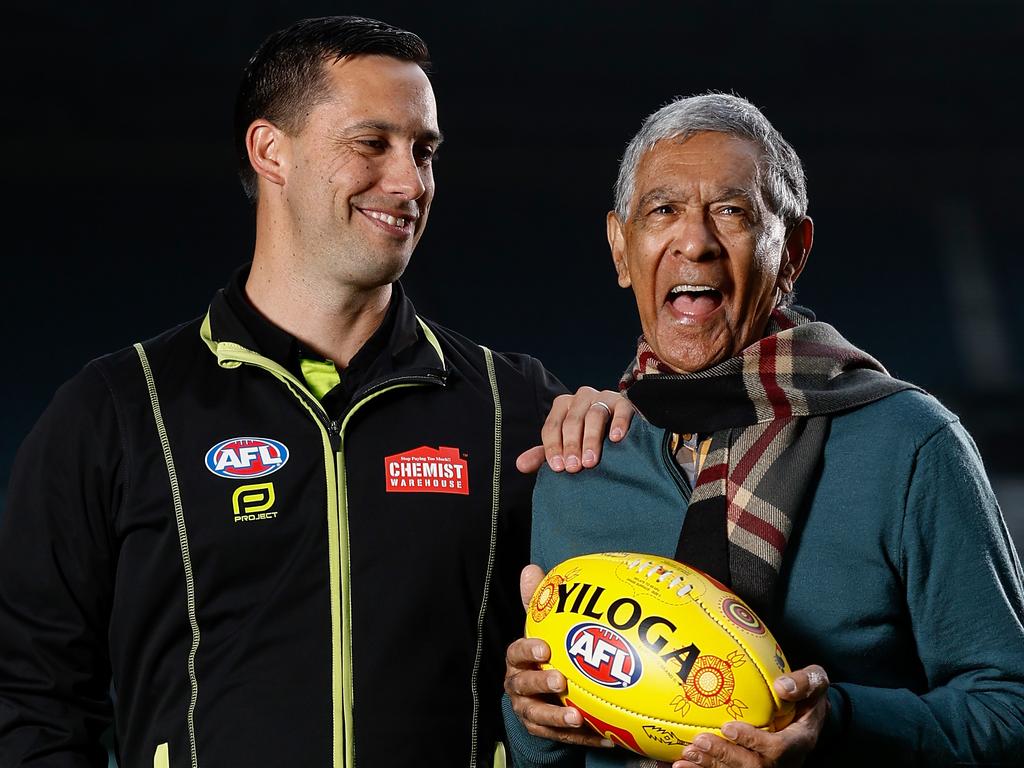
This week he is the honouree for Sir Doug Nicholls Round, fitting given the James and Nicholls families have known each other for more than 100 years.
“I cherish it because Doug Nicholls and his wife grew up with my mother,” James says about a history that runs deep.
Sir Doug’s daughter Aunty Pam Pedersen greeted James with a warm embrace at the launch of the AFL round this week. “It’s so lovely to see him, he’s such a character,” she says.
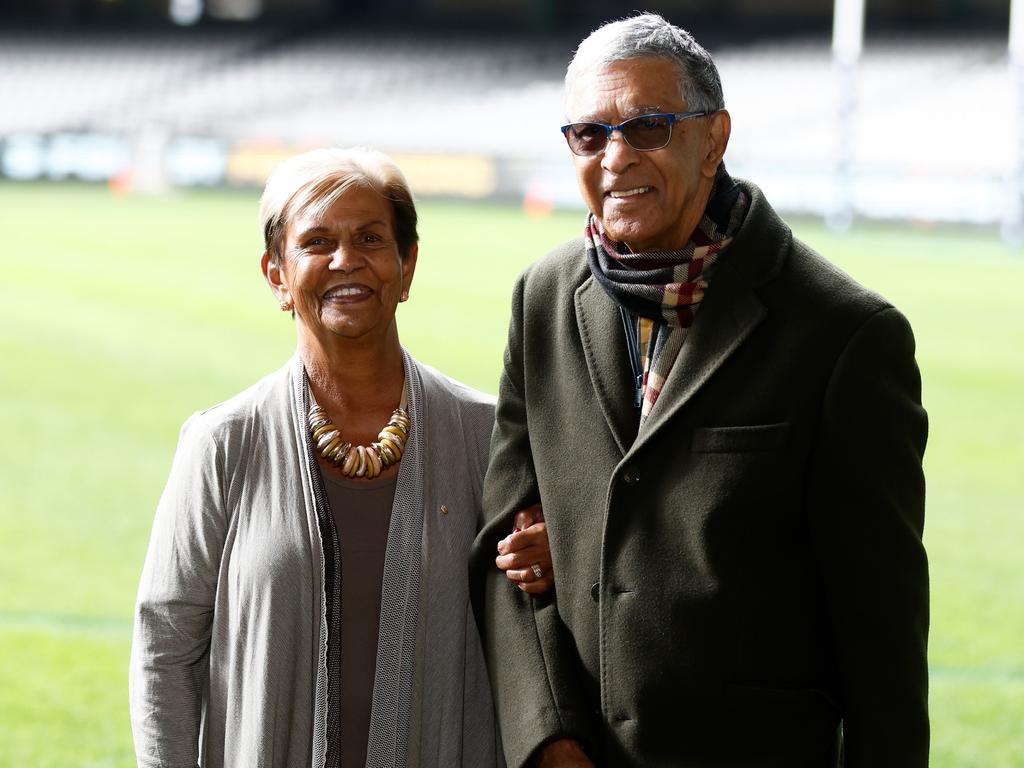
Now 75, James may move a little slower than his days in charge of grand finals but is still quick with the wisecracks that endeared him to players and media in a generation where many of his people were excluded.
“They’d call me a white maggot. So I‘d say, ‘Mate, you’re colour blind’!” he says with an infectious laugh.
Overcoming the racial prejudices of the era combined with the task of umpiring in front of baying spectators would seem a herculean task, but across 166 games James became perhaps football’s most loved umpire of all-time.
James credits his outgoing personality, fostered by a childhood competing with 12 siblings to get a word in, with breaking down barriers.
“I spoke to players more than any other umpire did. And I’d be first into the aftermatch to mingle and have a drink with all the players. I’d kick-on to 8pm.”
Those at the launch can attest to that charisma. He had a pack of journalists in stitches after telling one of them he looked like Dermott Brereton. “I reported you!”
James even achieved the ultimate in 1980s football, receiving a nickname from legendary commentator Lou Richards to rival ‘Lethal’ Leigh Mathews and ‘The Incredible Hulk’ Rene Kink.
He was ‘Jesse’ James, with ‘the fastest book in the west’, a nod to his propensity to pull out his notebook and report someone to defuse a hostile situation.
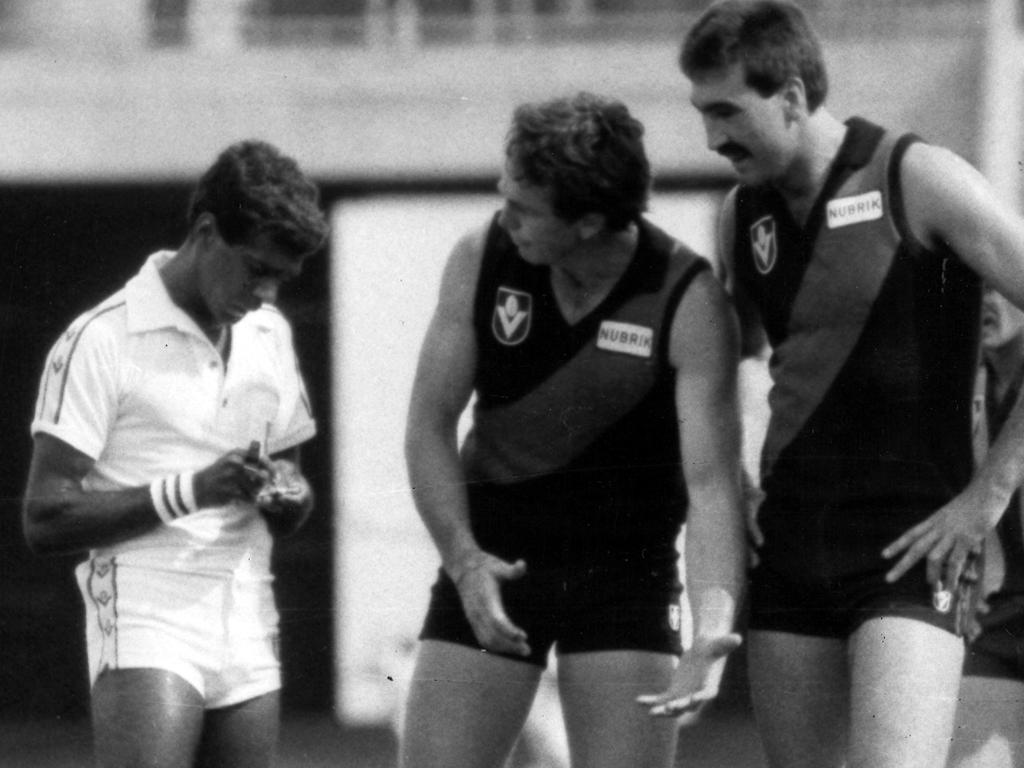
While white Australia knows him for pulling the game’s biggest stars into line, the Aboriginal community look up to him with admiration beyond that.
Football is only one part of a life rich in experiences and challenges.
In 1968 he was conscripted to the Australian Army just a year after being legally recognised as a citizen. He faced prejudice, then combat in Vietnam.
He spent decades teaching when he got back, he’s been a university lecturer, a youth mentor and an advisor to the Koori Court. He was awarded an Order of Australia Medal in 1987.
“The way he speaks to our youth, he has given such good advice,” Aunty Pam says.
And he still kept in touch with footy after retiring his whistle in 1985; serving as assistant coach of the AFL umpires in the 1990s and commentating on AFL games on Indigenous radio.
He’s sad there hasn’t been another Aboriginal umpire since.
“A lot of the guys that followed my lead didn’t quite make it because they didn’t have the coaching,” he says.
Current VFL Development Goal Umpire Josh James wants to change that.
The Noongar Wandandi Boodja man googled ‘has there been an Aboriginal AFL umpire’ as a teen in Perth and stumbled on the story of his namesake.
“I’ve read about his umpiring career, I‘ve read about him serving in Vietnam, his academy training and the way he was treated in the army, and his teaching career,” Josh James explains.
This week he met his hero, showing him the AFL umpires shirt for the round that he designed. Titled ‘Moorditj Koondarm’, which translates to “Strong Dreams”, it includes a tribute to Glenn as the first, and the quest for another to follow in his footsteps.
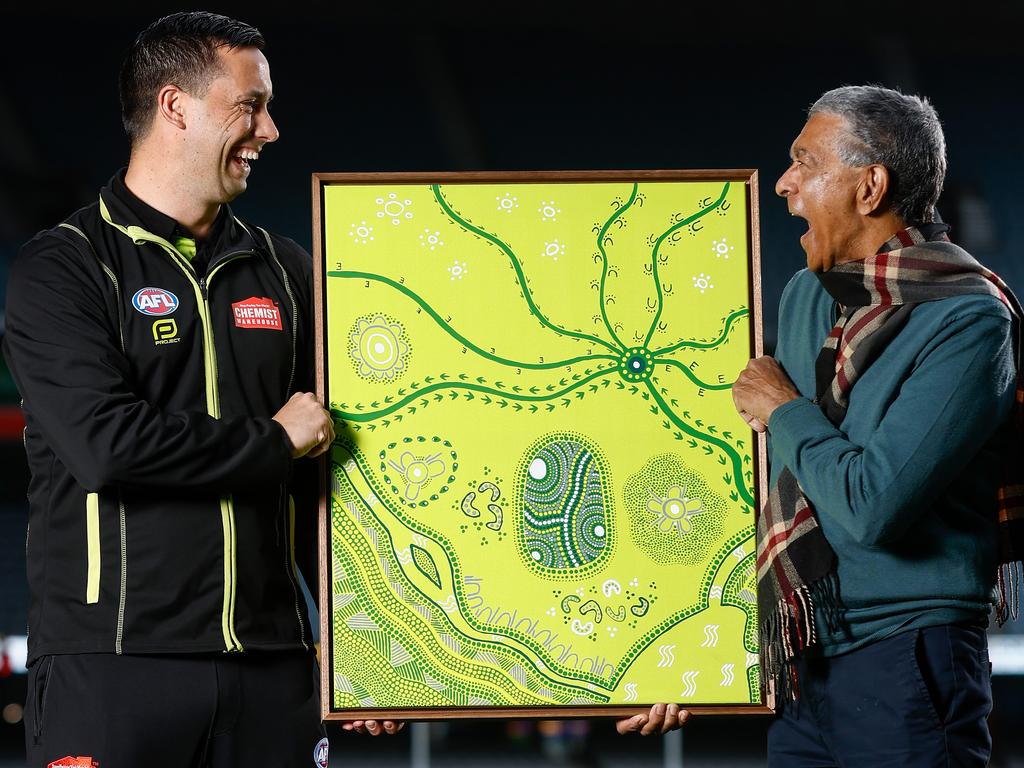
“I was starstruck, he’s my inspiration,” says Josh.
“I could spend hours with him just talking.”
More Coverage

Like Glenn has done through his life, Josh is taking on a bigger role beyond the field to build his skills. He’s an umpire coach and the AFL Umpires’ Aboriginal Ambassador, assisting Aboriginal umpires’ development.
“My dedication is to try to be his successor, to be the second Aboriginal to umpire in the AFL.”
There will be nobody happier to see that than Glenn James.

Hinkley lands major TV role in coaching gap year

Done deal? Crows could soon unveil new Nicks contract

The Newcastle club inspiring AFL dreams in NRL heartland

Top Crow reveals why Stevens got the nod as Roo’s replacement

‘S*** hit the fan’: Clarry breaks silence on Dees exit
