
The triple double is finally arriving in the WNBA as positionless basketball era nears
Across 26 seasons there have only been 16 triple doubles in the WNBA. The only thing more shocking than how few have occurred is how many of them have happened during the 2022 season.

Last season, National Basketball Association MVP Nikola Jokic notched a triple double 19 times, about one in every four games he played for the Denver Nuggets. Over in the WNBA? Across 26 seasons there have only been 16.
The only thing more shocking than how few triple doubles have occurred in the women’s professional game is how many of them have happened during the 2022 season: Three players have put up a total of five triple doubles — a game in which a player registers double digits in points, rebounds and assists — during the first half of the 32-game slate.
The triple double has been a rarity in women’s professional basketball in part because of shorter games and a more traditional style of play. The uptick now is a sign that the WNBA is following basketball’s shift toward hybrid players capable of playing more than one of the five traditional positions.
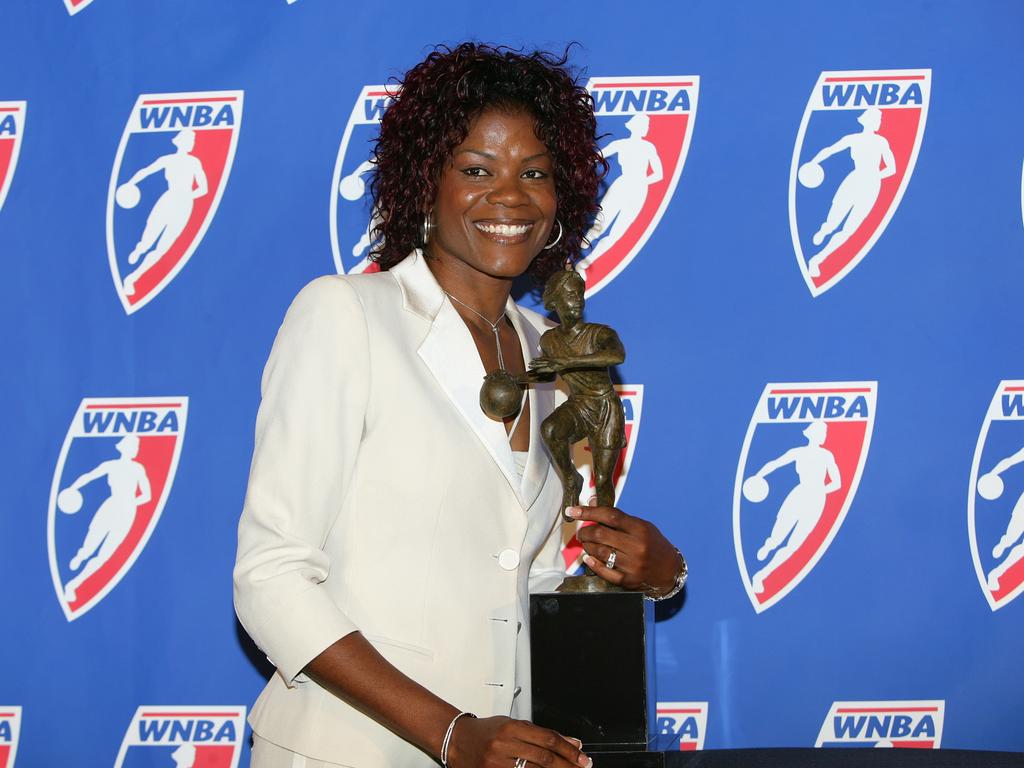
“When the league started in 1997 … you had a true 1, 2, 3, 4, 5,” said Sheryl Swoopes, the retired veteran who scored the league’s first triple double in 1999. She was describing the fact that each player in the league has normally played a very specific role. But now, she said, “More and more players — and teams — are starting to go toward a positionless basketball.”
The same thing is happening in women’s college basketball, where women have put up more triple doubles in five of the past six seasons. Players say this is likely a reflection of how much less concentrated talent is in college. Outside of a few powerhouse universities like Connecticut, South Carolina and Stanford, rosters often don’t feature more than one star player. With less depth, the best players often get free rein over the offence and have an easier time stuffing the stat sheet.
The move up to the WNBA is challenging, even for the best college players.
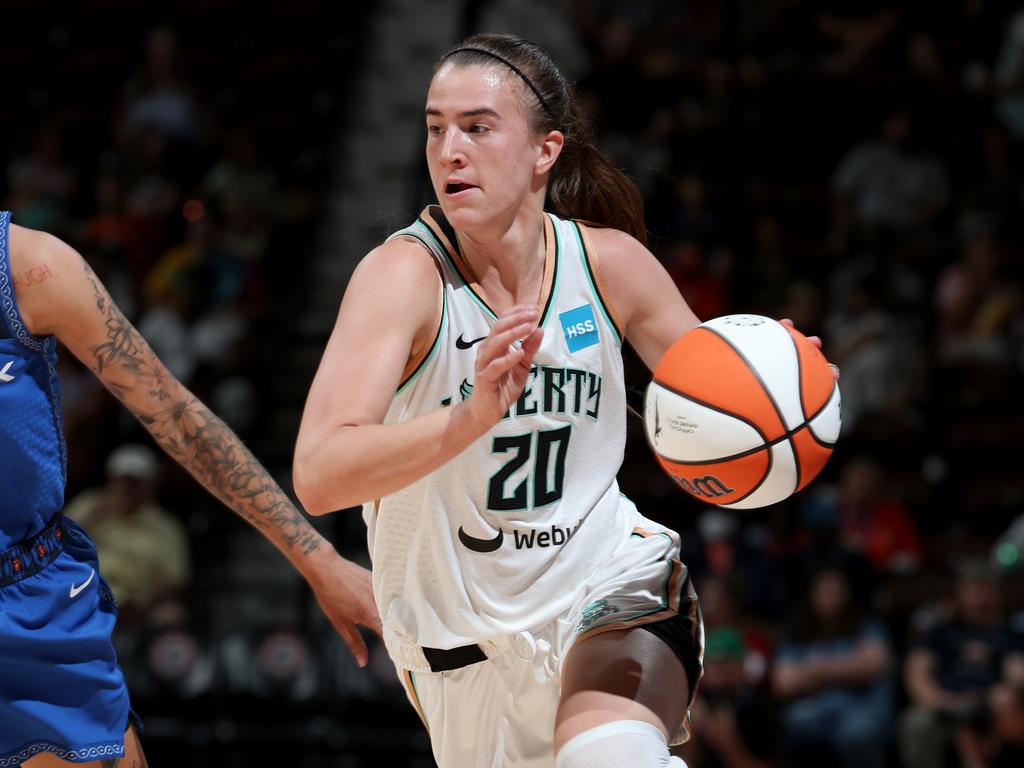
“Everyone is a lot more developed, stronger, more physical, higher basketball IQ,” said Sabrina Ionescu, a third-year pro for the New York Liberty who, at Oregon, set the NCAA record — for men and women — for the most career triple doubles. “You’re playing against players who have seen all types of defences, have been in all types of situations that are up to 19-20 years older.” In June, Ionescu became the first player in WNBA history to notch a triple double in three quarters or less.
A big factor in the WNBA’s smaller number of triple doubles is how many fewer minutes players have to operate compared with the NBA. Each quarter in the WNBA lasts two minutes shorter than the NBA’s 12-minute periods. Women also play 32 regular season games to the men’s 82. Excluding the playoffs, each NBA team is in action for 3,396 minutes of game time during the regular season, compared with 1,280 in the WNBA.
But the shift to a positionless style of basketball is gradual. Liberty coach Sandy Brondello says WNBA players still tend to remain in more specialised roles.
“A post player usually doesn’t give out a lot of assists. And a guard doesn’t usually give out a lot of rebounds,” Brondello said this month.
In their game against the Las Vegas Aces on July 12, for example, New York’s Natasha Howard had put up 13 points and 10 rebounds with four minutes left to play in the fourth quarter. On the other side of the ball, A’ja Wilson had also reached double-digit points and boards by the end of the third. Yet through the final frame, neither forward got much closer to reaching 10 assists, as Howard finished with three while Wilson tallied two.
Indeed, since Steph Curry and the Golden State Warriors began rewriting the rules of basketball by stretching the floor, the NBA has started to favour players who don’t neatly fit into one of the five prescribed positions. Beefy bigs like Joel Embiid started shooting lots of threes; point guards aren’t just compact ballhandlers, but can be 6-foot-11 giants like Giannis Antetokounmpo.
This schematic shift has been slower to take in the WNBA. It’s rarer to see a stretch four or a towering point guard, Swoopes said.
“If you look at the WNBA overall, it’s definitely more fundamental than the NBA,” Swoopes said. “It’s more of a let’s move the ball, let’s make them defend us, let’s run our sets … and let’s get the ball to the right person at the right time.”
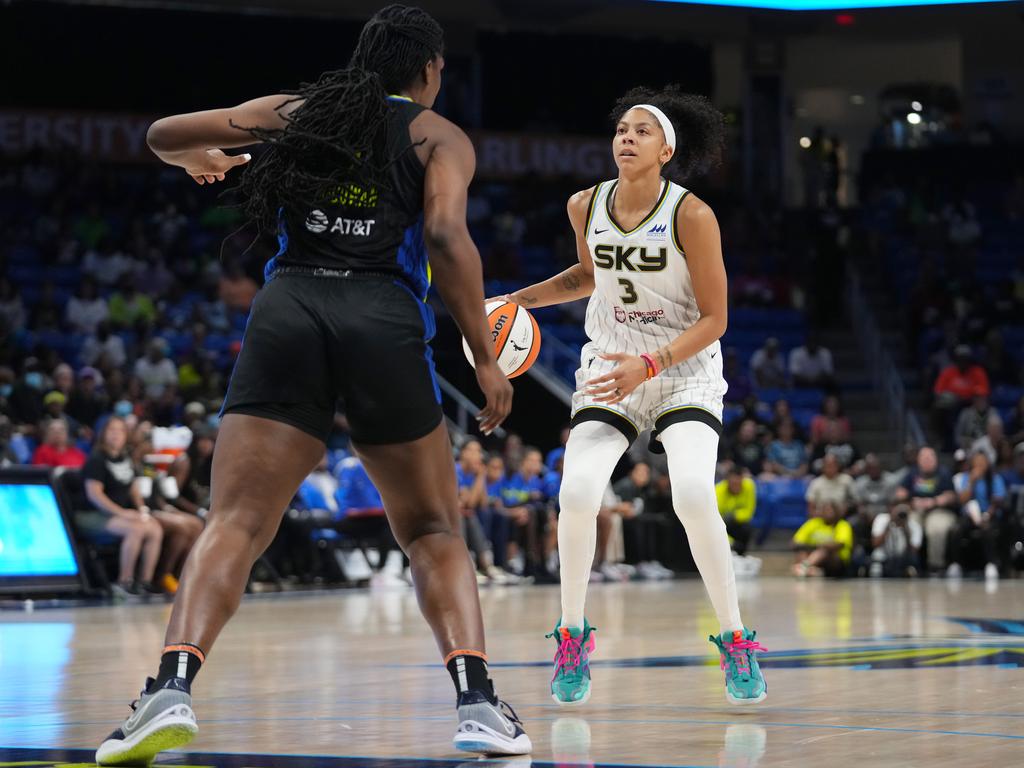
Ionescu and Candace Parker of the Chicago Sky are the exceptions in the WNBA. For the 6-foot-4 Parker, who is listed as a centre-forward, the post is her happy place. But she also gets assists because she takes the ball up the floor like a point guard and dishes it to talented teammates like Allie Quigley and Courtney Vandersloot.
It’s an element of her game that she’s added over the course of her 15 seasons as a professional, said Temeka Johnson, who scored the WNBA’s sixth triple double ever in 2014, said of the 36-year-old Parker. “She gets better with age.”
Ionescu, a 5-foot-11 point guard, is one of the best in the league at passing and pulling up for threes in transition. The surprising thing about her game is her ability to weasel past bodies down low and out-hustle defenders half a foot taller than her to collect rebounds.
“When people talk rebounding, they think you have to be this big strong player,” Swoopes said. “I’m like ‘no.’ Rebounding is all about heart and effort.”
It is not a coincidence that the only two players in WNBA history to score more than one triple double in a single season are also the league’s most positionless athletes. As the women’s game catches up to the NBA, it’s possible that there will be more hybrid players like Ionescu and Parker — and more triple doubles.
“Guards can do more and they want to do more,” Johnson, now an assistant for the Western Kentucky women’s basketball team, said. “The game is changing.”

50+ photos: Ellas Titans, Tracy Village triumph in basketball finals

Overtime heartbreak extends United’s losing run

Bitter NBL break-up: Trez says Sixers deserted him

Came to play, want to stay: NBL imports set to join Aussie Bryce

New era for NT Basketball after dramatic vote
