
Alastair Cook: If England come through the first Ashes Test unscathed, pressure will be on Australia
You have to start well. You don’t have to win in Brisbane but you must not lose and if you have your foot on Australia’s throats, keep it there.
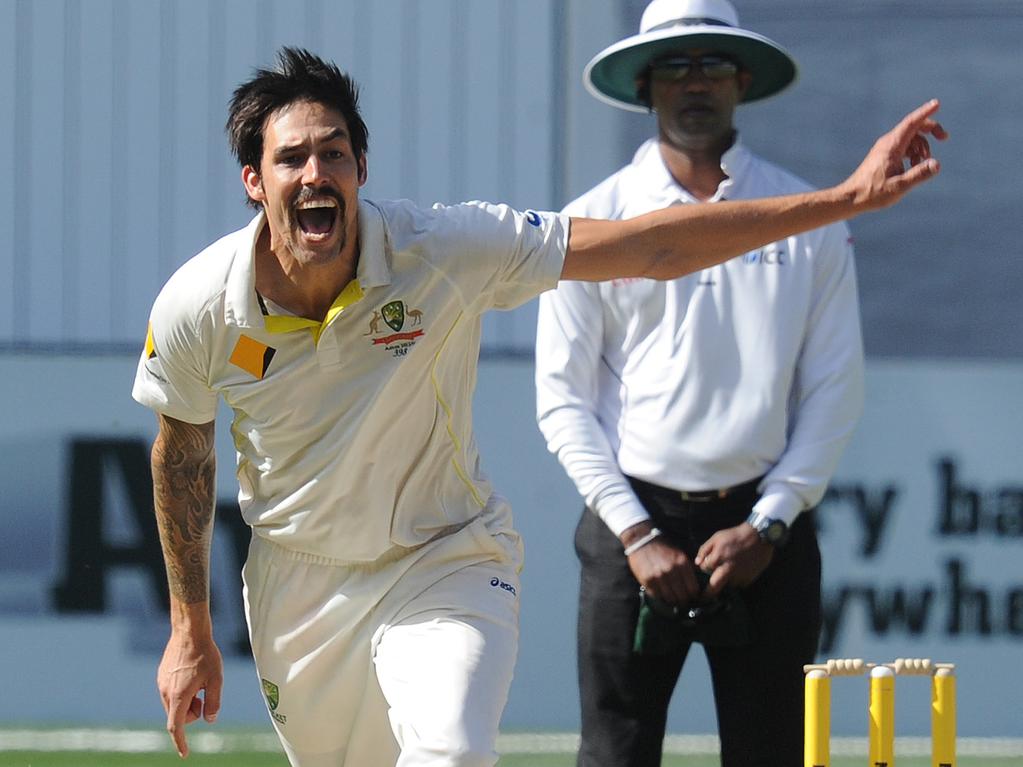
Brisbane, November 21, 2013. I had just got back to the team hotel after the first day of the Ashes and bumped into Mark Nicholas in the lift.
Australia were 6-132 at one point before Brad Haddin and Mitchell Johnson helped get them to 8-273. With England having won the Ashes 3-0 in the English summer, Mark said how good it was for the series that we hadn’t rolled them over for 200 and reasserted our dominance.
I begged to differ. In fact, I couldn’t believe what I was hearing. This wasn’t simply about wanting to bowl your opponents out for as few runs as possible; it was also because, on my third tour, I understood the dynamics of an Ashes series in Australia.
You have to start well. You don’t have to win in Brisbane but you must not lose and if you have your foot on Australia’s throat, as we did early in the piece, then it pays to keep it there before the role of aggressor and victim can be reversed.
Sure enough, when Johnson got the ball the next day, he was part of a team with renewed vigour (and bowling for a captain, Michael Clarke, who knew exactly how to rotate and set fields for him). He took nine wickets in the match.

After that first Test defeat, we all knew it would be a long tour if we couldn’t stop the momentum in the second Test at Adelaide. We didn’t, and the rest was history as we lost 5-0 to a Johnson-inspired Australia.
“Don’t lose” is therefore my best advice to England before the first Test in Brisbane. If England can get through the Gabba unscathed we could have a fantastic series ahead of us.
We have been beaten comfortably in every Ashes series in Australia this century bar one, and that was in 2010-11 when we drew the opener at the Gabba, despite a first-innings deficit of 221 runs. From then on, the pressure was on the hosts.
There has never been a better time to put pressure on Australia because the departure of Tim Paine as captain and his subsequent withdrawal from the Test squad is the kind of external noise that a team does not need going into such an important series.

There has been speculation that Paine’s absence will make Australia stronger. It’s possible that his replacement, whether it’s Alex Carey or Josh Inglis, may be a better wicketkeeper-batsman but the removal of an established captain, in such circumstances, is a distraction that can only unsettle the team dynamic.
Remember how disruptive all the fuss was about whether Ben Stokes would or wouldn’t tour in 2017, or Jonathan Trott flying home in 2013. Nor do we know how Pat Cummins’ limited captaincy experience will withstand a series.
We know from the series against India last winter that this Australia side, even at full strength, is susceptible to pressure. In the third Test in Sydney, in January, it failed to bowl India out to win, despite having more than four sessions to do so. In the next match, the decider in Brisbane a week later, Australia allowed its opponents to chase down 328 on the final day.
Remember also that this was Australia’s last experience of Test cricket. England has played 11 Tests since then. Hand the Aussies an easy win next month, however, and the confidence will be surging through their collective system quicker than blood at Castle Dracula.
The worry for England is that of those 11 Tests – against India and New Zealand – it lost six and won two, and were up against it in the two draws. There are as many if not more question marks over England’s form and selection, which is what makes this series fascinating, or worrying, depending on your perspective.
When we won in 2010-11, we had experience and form in our favour. The top seven were the same throughout and we all, with the exception of Trott, had played at least 50 Tests. James Anderson, Stuart Broad and Graeme Swann were each at the top of their game but when Broad went home injured after the second Test and Steven Finn – though the leading wicket-taker in the series – was deemed too expensive for our game plan, we had Chris Tremlett and Tim Bresnan, who exceeded expectations.

There is a lot of talk about quick bowlers being a prerequisite to win down under, but I’m not sure that is as true as it once was. Most surfaces are drop-in, which makes them similar. Perth and Brisbane boast the most pace and bounce, but not to the extent they once did.
Eleven years ago, no one would have described Anderson, Tremlett and Bresnan as express, but they were all capable of hitting 135kmh-plus (I remember “Bres” hit 140kmh at one point). More significantly, they were able to make the ball do just enough and bowl to a tight game plan.
The stats for that series show that only twice did we bowl Australia out for less than 250. In England you can score 250 in the first innings and still be in with a shout. In Australia, it’s imperative that if you win the toss and bat first you post a big score. In 2017-18, though we scored more than 300 in the first innings of all but one Test, we still lost 4-0. It’s not enough to have just one batsman score a ton. You often need two, or that one man going big – the importance of which Graham Gooch thrashed into us.
As a bowling side, you need options. Swann wasn’t a huge factor in 2010-11 but when presented with a turning wicket, runs on the board and the chance to win a match on the final day he did exactly that in Adelaide.
I’d be happier if Jack Leach had had some time with the ball in the northern summer. With Stokes giving England a fifth bowling option, however, I hope we see him at some point and that he can play his part as Swann did in our success.
The loss of Jofra Archer obviously deprives England of one pace option, but it’s not fatal.
What about if Australia loses one of its strike bowlers? In every series I lost to the Aussies, their bowling unit went almost unchanged. Good for them, but if one of Cummins, Josh Hazlewood or Mitchell Starc is injured, what have they got in reserve? As I said, there are so many questions for both.
-The Sunday Times

In town for the Ashes? These are the best Adelaide pubs to visit

Why Lyon doesn’t have a ‘point to prove’ as Test recall looms

Smith illness threatens Aussie line-up chaos as Poms ignore Bashir

Brook declares England must ‘rein it in’ as vice-captain finally breaks silence

How England’s two-year plan made forgotten man an Ashes ghost
