
Cricket tragics in Melbourne’s Mid Year Cricket Association are able to keep the rain away
Many laughed when Victorian community sporting figure John Hammer dreamt up a mid-year cricket competition. Twelve years on, winter players have rarely missed matches, writes PAUL AMY.

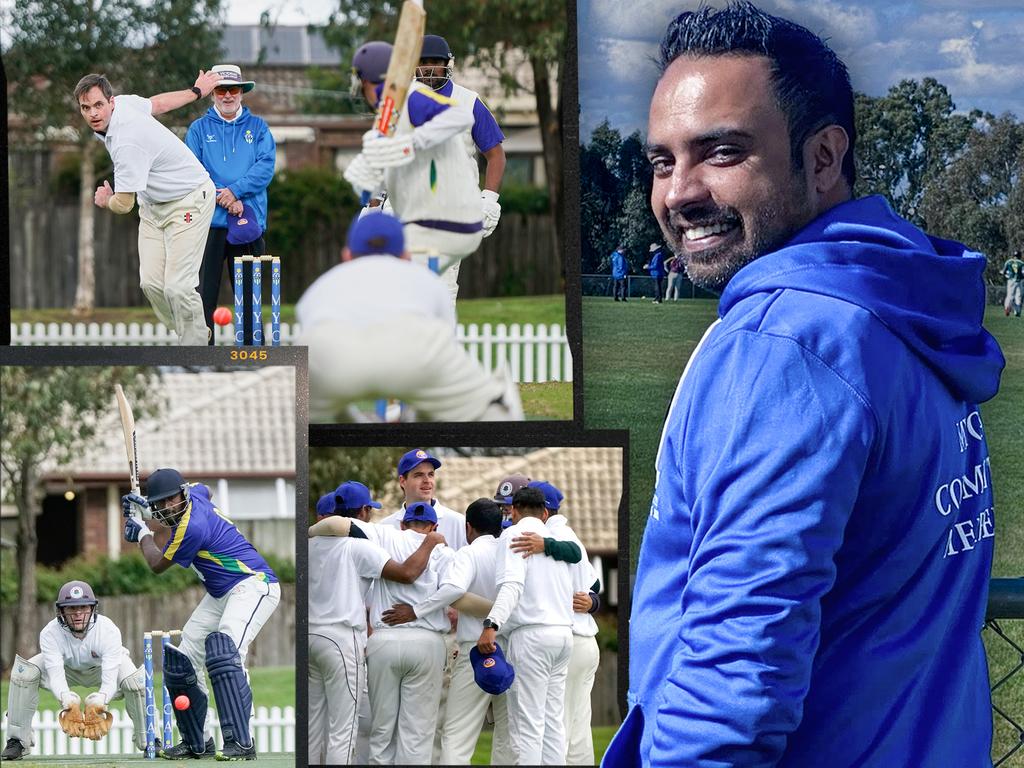
It’s a winter Sunday morning at Thomastown East Recreation Reserve in the north of Melbourne and the crisp air carries a question more often asked in summer.
“How is that?’’
The umpire says not out.
Still, the fielding team remains hopeful of a wicket.
“You can feel the pressure building, boys. Watch him throw it away,’’ first slip says.
“Take the chance when it comes,’’ another fielder chips in.
There is encouragement for the spinner: “Bowled. Lovely, mate. Really good.’’
It’s representative day for Melbourne’s Mid Year Cricket Association (MYCA) – on one ground the best players from the north are playing the best from the south and on another east is meeting west – and the weather is pretty much perfect.
That does not surprise association president Raj Bhatia.

He’s often asked how cricket can be played during a Melbourne winter.
Easily, he replies. And enjoyably.
The MYCA was formed in 2010 and since then, Bhatia says, has rescheduled only three rounds of matches.
Of course, games have been lost to wet weather or damp grounds but Bhatia says it happens a lot less than people think.
“Believe it or not, we don’t really have that many washouts compared to summer cricket,’’ he says.
“The games that do get washed out, a lot of that’s due to rain the previous night and some grounds not draining well.
“But for association-imposed washouts, there have been three in 12 years and we haven’t done it for a while because some areas of Melbourne receive more rain than other areas. There’s no point in making a blanket washout. Somewhere there will be cricket.’’
*****

Indefatigable Victorian community sporting figure John Hammer had the idea of forming a winter cricket competition.
He studied rainfall figures to see if it was practical, and found that from late April to late August the weather was generally fine from noon to 4pm.
Hammer, soon to turn 87, says a few people laughed at him when he raised the prospect of cricket being played year-round.
“You’ll be washed out every second game!’’ one official from a suburban association told him.
He thought otherwise.
“As far as I was concerned there was no reason stopping it from going ahead,’’ Hammer, who also established the Over-60s cricket and Superules football competitions, says.
“I didn’t think rain would be a problem and you had players who wanted to keep playing all the way through. There was certainly enough of them. I think they’re called tragics, aren’t they?’’
The MYCA started with 10 teams, mostly in the bayside area.
Now there are 208 from all over Melbourne, from Donnybrook to Doveton, from Mernda to Mt Waverley, from Wyndham Vale to Wandin.
“A lot of our players want to play year-round, especially those who are at a higher level in summer,’’ Bhatia says.
“They want to keep up their skill-set and hopefully improve in a few areas.
“Then there are other players who are steering away from the more traditional winter sports like football and soccer.’’

This year the season started on April 30, with nine rounds scheduled to July 30, semi-finals on August 6 and grand finals on August 20.
Matches are 35-overs-per-side affairs, played on synthetic wickets and from 12pm to 4.45pm.
A yellow ball with an extra coat of lacquer is used. Leading Australian cricket equipment manufacturer Kookaburra developed it specifically for mid-year cricket.
Umpires are appointed to most games – and former Test umpire Bill Sheahan is a regular in the ranks.
There are no gradings in the MYCA – all divisions are region-based – and the standard is good but can vary, according to Bhatia.
A typical team is made up of a players who in summer competitions line-up from First XIs down to lower grades.
Matches can occasionally turn into mismatches.
This year Preston Sub-District bowler Marcus Murphy lifted the MYCA into the headlines – no easy thing with the sporting media focused on football – when he captured 7/2 off 2.4 overs for the Northern Bulls against Darebin Chargers in North Division.
The Chargers were dismissed for four.
Bhatia, 36, of Bundoora, had the best view of the flying stumps: he was keeping wickets for the Bulls, a winter-only club.
He says the association is looking at team gradings next year.
“We’re at that stage where there are a lot of sides in a lot of divisions (23),’’ Bhatia says.
“When I speak to the players, they tell me playing in MYCA in some divisions is a lot harder than summer cricket.
“We’ve got players who play District level, Sub-District level and all the way down from there. In my team for example, there’s a mixture of players with different skill-sets. We’ve got a Sub-District ones player, we’ve got a lot of club-level ones players, we’ve got twos and threes club-level players. They’re all good friends and it allows them to play together, an opportunity they wouldn’t get in summer.’’

Murphy is one of the most credentialed players in the MYCA this year.
Arosh Janoda – a Sub-District team-of-the-year player with St Bernard’s and a contestant in this year’s Melbourne Renegades Recruit television series – and former Sri Lankan first-class player Damith Ratnayaka are others.
In past years Victorian Premier Cricket Ryder Medal champion and former Big Bash League all-rounder Trent Lawford had a run in the MYCA, whacking the yellow ball for Wyndham Vale.
Experienced player and coach Mark Cooper is a Mid Year mainstay of the south and was selected in the annual representative challenge match against NSW.
Cooper plays for Merinda Park and serves on the association executive.
“You’d be amazed at how many Saturdays are playable for cricket, and it kind of makes you think about summer and how precious we can get at times with conditions,’’ he says.
“The attitude is that, if it is a bit wet, you can still carry the game on.
“It kind of makes you think, does turf cricket need to step outside the norm and what we’ve always done? Do we play the first month of the season on synthetic to get cricket in right from the start?’’
Cooper says the Mid Year competition is growing in credibility and popularity.
Players do not train.
But they do take it seriously.

“It is low-key but everyone wants to take wickets and make runs,’’ he says. “It’s very normal in that regard!’’
As Cooper and many others can attest, money has flowed into local cricket in recent years but Mid Year is strictly amateur.
No players are paid and Bhatia says the association wants it to stay that way.
“It’s against the rules and if any player is found to be monetarily compensated, the association will remove that club,’’ he said.
“We’re just encouraging people from all walks of life – and we are very multicultural – to play cricket. We’re not about money.’’
An eight-team women’s competition started this year – officials are hopeful it will grow to two divisions in 2023 – and there are junior sides too, with west, north and south divisions.
The women play Twenty20 games on Saturdays from 8.30am and the juniors on Sundays from 11am.
The new teams have added to the MYCA’s biggest challenge: Getting grounds.
Cricket is down the pecking order when local councils complete their winter allocations.
Still, Bhatia says the association is using more than 80 grounds and has formed good relationships with councils. They’re recognising mid-year cricket as a worthy and expanding competition, he says.
“We’re working closely with the councils that are in the growth areas of Melbourne to try to secure more grounds once they’re built,’’ Bhatia says.
“I think generally councils have realised with the changing demographics and changing demands cricket is something they’re going to have to facilitate all-year round. From our point of view they’re doing an amazing job in supporting us.’’
He says Cricket Victoria has also been supportive in liaising with local government and helping the competition get away to a steady start.

Clarke: England’s U10s blunders and ‘ruthless’ Australia’s 5-0 quest

The king of Adelaide is still just the boy from Adelaide

Australia keep door open for Khawaja after latest Test snub

SuperCoach BBL: Verdicts on best round 2 trade targets

Police probe alleged sexual touching of junior cricketer
