
Steve James: I knew I’d lost even before I faced my first ball from the mesmeric Shane Warne
Steve James has first-hand experience of Shane Warne’s aura – a swagger that left opposition batsmen in no doubt as to who was in charge.
It was the wait. Shane Warne never bowled until he was ready. With the ball in his hand, he was completely in charge, and he let everyone in the ground, and most especially the batsman on strike, know that was the case.
I actually faced Warne for only a few balls in county cricket, with the last of them ending up in the hands of slip when I was certain it was going out on the leg side for an easy single, but even in that short time I was thinking, ‘Just get on with it, will you?’ Which is exactly what he wanted. I’d lost before I’d started.
“It was my domain, I owned it,” Warne explained what he was thinking about at the end of his mark in the brilliant recently released documentary about his life and career. “Nothing could happen until I let go of the ball. I played it at my pace.”
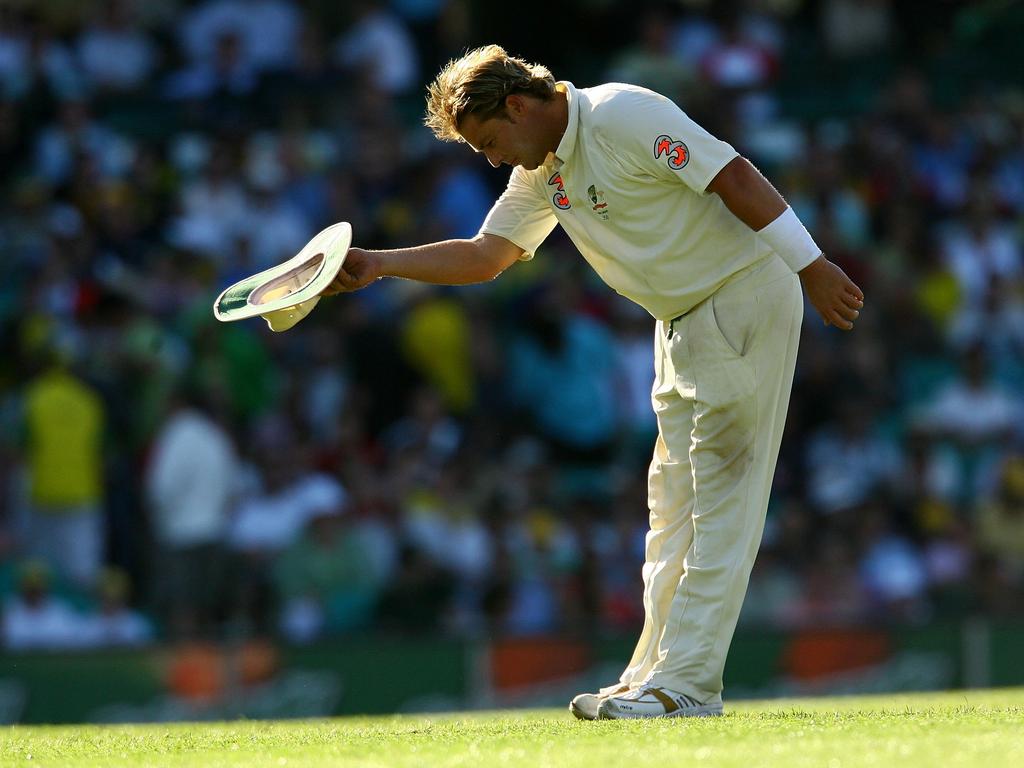
Warne would stand at the end of that mark and stare at you. He would survey the field and make a small adjustment here and there. Sometimes he would have a plan, and indeed he was one of the game’s great thinkers and strategisers, but often he was just creating an illusion, sometimes moving a fielder back and forth so that he was actually back standing where he had been before Warne’s bit of theatre.
As he admitted in his book, No Spin, written with the former Hampshire captain Mark Nicholas, “The art of leg spin is creating something that is not really there. It is a magic trick, surrounded by mystery, aura and fear.”
Young players are often advised that they should play the ball and not the man (or woman), but in no battle was that ever harder than when facing Warne. The man was mesmerising.
Before him no spinner had ever had that effect on opponents. Yes, they had obviously troubled the batsmen with their wiles, but no one had ever got inside the mind of a batsman like Warne did. The smiling assassin Muttiah Muralitharan did not do that.
Warne scared batsmen. That was previously only the preserve of snarling fast bowlers. As Warne said in that documentary, “One of my strengths was that I could intimidate people. I was a man on a mission, I wasn’t taking any prisoners. I wouldn’t have liked to have played against me. I was nasty.”
Indeed, he could be. Some of his language was rather industrial, to put it mildly, but that was just his competitive nature and an Australian cricket upbringing immersed in sledging coming through. Off the field he was always charming, and helpful too.
If he could give advice to another leg spinner he would. Last year I sent him, via my colleague Mike Atherton, some footage of a young ‘leggie’ I coach and he immediately responded with a video full of encouragement and one particular piece of superb technical counsel.
As a bowler Warne just never wanted the batsman to feel comfortable. “If you batted against him for a session you would be utterly exhausted,” Andrew Strauss observed in the documentary.
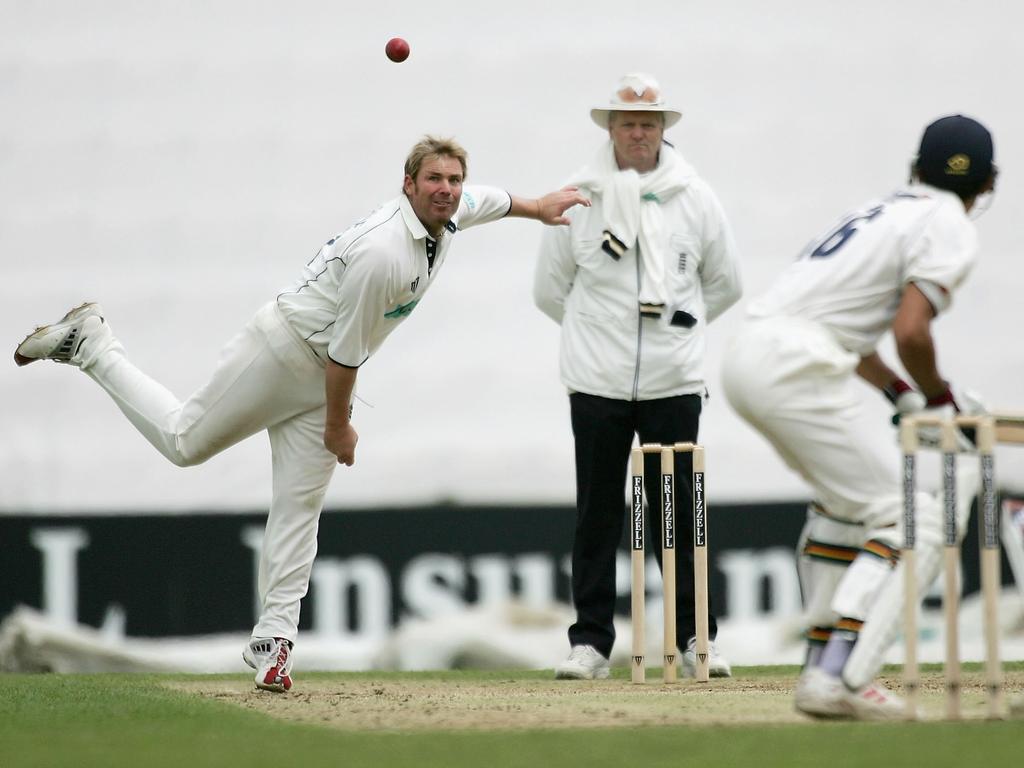
Warne was as much an analyst as a psychologist too. The first time I played against him I quickly became aware that he was watching my every movement. He did that with every batsman. He was looking for clues in the stance, the grip, where a player liked to score, whether he was happier defending or attacking, and much, much more. He had no need for an analyst on the sidelines. He did the work himself and there in his own head it remained.
He was once flummoxed a little by the West Indies batsman Carl Hooper, who was a magnificent player of spin. He could not find the clue, as he could immediately with most players, of when Hooper was going to advance down the wicket at him. He even stopped at the moment of delivery a couple of times to see what Hooper was revealing. Warne naturally persevered and eventually worked out that Hooper usually looked down in his stance, but when coming down the pitch he did not do that, fixing Warne with his eyes throughout.
The skill levels were remarkable. Leg spin is the most difficult of arts. Bad balls are an occupational hazard, and fields are set accordingly, but Warne took the art to another level with his accuracy. He had all the tricks: the leg-spinner, the googly (or at least until he did so until 1998 when his shoulder went), the flipper (out of the front of the hand with backspin on it) and a variety of balls that went straight on from the side of his hand and had different names like zooters and sliders, all helped by his having huge hands and strong wrists, strengthened as a child when he broke both legs.

Under the guidance of his mentor, the late Terry Jenner, he learnt how and when to use those variations. He became a master of using the crease and of setting up a batsman. Pulling or cutting his rare short balls was a dangerous option, because the follow-up was often a flipper of the same length that skidded on, leaving the batsman, for instance Alec Stewart at Brisbane in the 1994/95 Ashes, either bowled or leg-before, and highly embarrassed.
Warne could do that. With a ball in his hand he could embarrass, he could intimidate, he could attack, he could defend. He could do everything.
-The Times

Michael Neser destroyed England — but he might also save them

Waugh out; Waugh in: The Ashes selection which captivated a nation

Up to the stumps, up the order: Carey’s challenge to selectors

Connolly overshadows Babar to lead Perth to BBL win

Aussies’ biggest selection hints yet as Adelaide line-up intrigue swirls
