
What really happened to Ross Barkley, from Everton to Chelsea to Aston Villa and now Nice
In a version of reality Ross Barkley has long surrendered, he would be starring in midfield at the World Cup this month. The one-time Everton hero spoke with TOM KERSHAW.
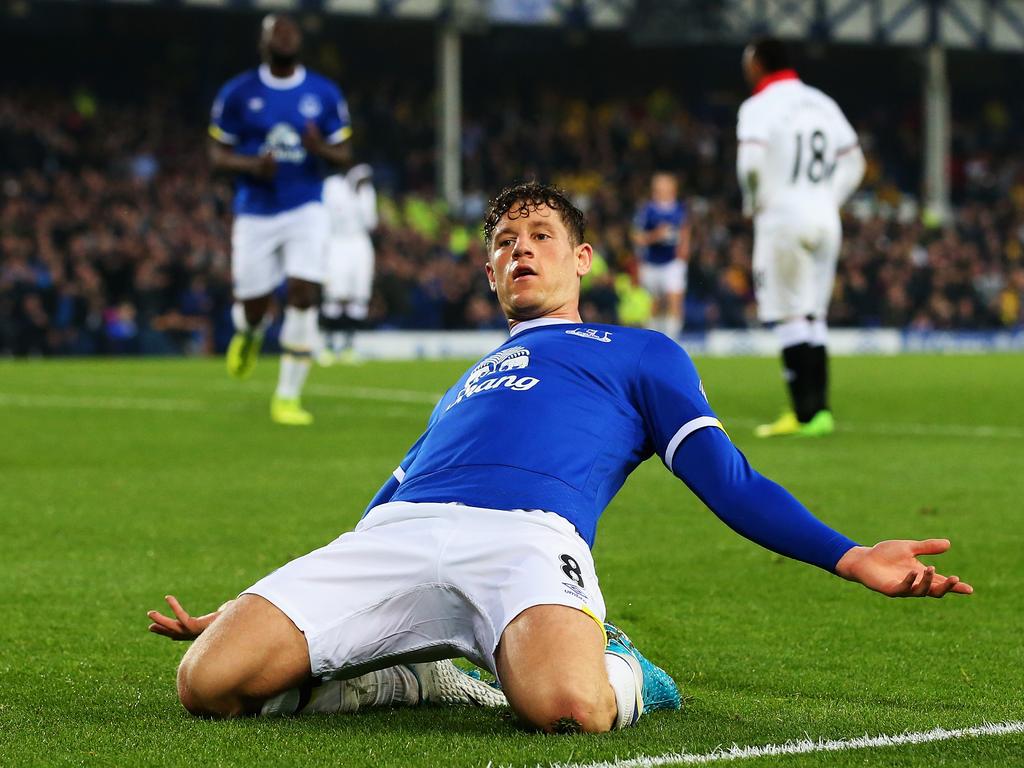
In a version of reality Ross Barkley has long surrendered, he would be starring in midfield at the World Cup this month, almost a decade after being anointed as the next saviour of English football. In a different and altogether more distant vision he still hopes to resurrect, he is taking his children to their first game at Everton without having to worry if the hurt and hostility of his exit will render them unwelcome.
It is a thought that lingers on the horizon as Barkley stares out over the French Riviera and there remains a great deal to unravel between those two scenes, but most of all he is contemplating how his career has flown by in what feels like the blink of an eye.
“From 19 to 23, football always seemed to go so slow,” he says almost wistfully. “Then it all happens very quickly; loads of games, injuries, being in and out the side. One season’s done, then another, and before you know it, you’re 28. You never really know what’s around the corner.”
What Barkley had not necessarily envisaged is that it would lead him to OGC Nice, the Ineos-owned club who have signed a cluster of former Premier League players, including Aaron Ramsey, Nicolas Pépé and Kasper Schmeichel. It is an “exciting project” with serious promise, but there is no escaping the fact that it is a step down from Chelsea, where Barkley agreed to terminate his contract this summer after 4½ years that often flattered to deceive.
“I don’t have any regrets,” he insists. “I loved my time at the club and made friends for life, but I left with a lot of frustration and hunger. Football is a big part of my happiness and, over the last couple of years, I don’t feel I had the chance to fully show what I’m capable of with proper game time and it affects you mentally when you’re just sitting on the bench.
“You warm up thinking ‘I might not get on here’, then you don’t for five games, and those negative thoughts take a toll on you. I didn’t want to have that for another year. I just wanted to get back to playing because that’s what I love, that’s what I’ve always loved, and so it was a no-brainer to come to Nice and start again and just feel free and really enjoy my football.”

Barkley has made seven appearances since joining the Ligue 1 club and there is genuine relief as he describes feeling “more like myself again”. Even then, he is all too aware that this was hardly the destiny mapped out after his dazzling breakthrough in 2013 when Barkley was hailed as the natural heir to Wayne Rooney at Everton and won comparisons to Paul Gascoigne with England while still only a teenager.
If the bar was set impossibly high, the intervening years have still brought considerable success. Barkley points foremost with pride to the Europa League medal he won in 2019 when he played a central role under Maurizio Sarri in what amounted to his best spell at Chelsea, but from thereon he flickered on the periphery rather than becoming the leading light many had predicted. “When I did get games here or there at Chelsea, it felt like I surprised certain fans. Like, ‘Oh, Ross still looks like a decent player’,” he says.
There are a few theories as to what held Barkley back, with frequent injuries accounting for as much as his indifferent form, albeit none more severe than the broken leg he sustained as a 16-year-old that left doctors insisting he would never play again. The wound that has lingered, though, stems back to the long-term hamstring injury that overlapped Barkley’s acrimonious move to Chelsea in January 2018.
It remains a source of rancour among Everton fans, who felt betrayed at how Barkley ran down his contract from the sidelines before leaving for a cut-price fee of £15 million. On the training pitch, a struggle for fitness paved the way for a stuttering start but, away from it, it took longer for Barkley to escape the cloud of how things had been left in Liverpool. “It’s hard because you’re chasing the dream of winning big trophies, but obviously it wasn’t the greatest way of leaving,” he says. “You build a real connection with the fans and Everton’s a family club so you feel really close to everyone. Then, when you leave, you realise everyone is sort of p’d off with you.”
For around a year, as Barkley received all manner of threats and abuse — his comments have been turned off on social media ever since — he admits he was “worried” for the members of his family living in a city united by its animosity towards him. “For my mum, it was fine but when I went back [to see her], you feel the negativity from drivers next to you at traffic lights or when you’re walking through town. You feel it from the Everton fans in a way like how they despise Liverpool. I remember my first game back at Goodison, they were really on me, but that’s football. It’s a decision I made so you have to accept it. My love for Everton won’t ever change. I want to go back in future when I have kids but I don’t know if it will still be a bit toxic.”
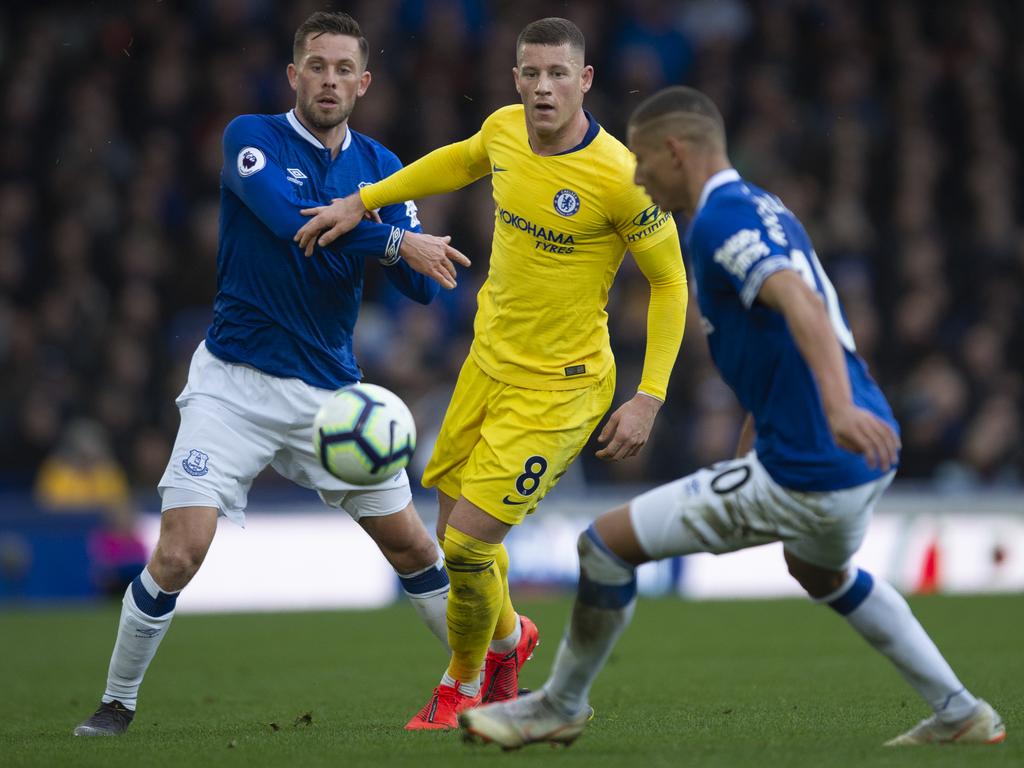
The contempt has now subsided into ambivalence for the most part, and there is no denying how Barkley had illuminated Goodison Park in the preceding years. “I enjoyed my football the most at Everton,” he says. “Under Roberto Martinez, I played every game, I played with freedom and tactical discipline as well, and I had the trust of the manager, which always helps. I had a clear mind and, because of that, I was at my best.”
Some would point out that, as Barkley’s career stagnated at Chelsea and a loan spell at Aston Villa in 2020-21 ebbed towards its unsatisfactory conclusion, his mind appeared distracted. Being photographed in the early hours built up a narrative that Barkley was frittering away his time and talent in nightclubs, a public portrayal that undermined his private desperation to get his career “back on track”.
“If you’ve got a couple of stories in a paper, it creates a perception of you. That’s just the way football is but it doesn’t reflect the people that know you on a day-to-day [basis]. They know how dedicated I am to my craft,” he says. “You do think at times, if I didn’t make certain mistakes, would people judge me in a different way? It can be cruel but that’s how it goes. It tests you but making mistakes is normal in your twenties. It is part and parcel of my story anyway.”
The suggestion that Barkley got carried away with fame or fortune, though, is one he strongly rejects. “At the end of the day, I know the way I approach football hasn’t changed from day one,” he says. “I don’t see myself as someone who played for England or who’s a celebrity or a star or whatever. I still see myself as the young lad that started playing for Ash Celtic [his childhood club in Wavertree] because he loved football. That’s never changed.”
And in a way, before getting to his “dream” of adding to his 33 England caps, what Barkley is really searching for is to recapture that old sense of bliss that’s been scathed and strained in recent years. “You’ve got to just try and enjoy every moment,” he says, and he has that now at Nice, even if the landscape in front of him is rather different to what he once imagined.
“From being a youngster to now, I’ve learnt a lot and I’ve always come through whatever difficult spells as a better player,” he says. “I’m in my prime and a position now where I can show how good I still am.”

SuperCoach EPL: How to replace missing AFCON stars

Sydney football club mourns player killed in Bondi terror attack

The Tackle: Mata has last laugh over ‘embarrassing’ Wanderers

The Melbourne-born teen who has world football giants circling

Vergos ends drought with brace in original derby win
