
After 25 years, MotoGP bids farewell to Valentino Rossi, a loveable, ruthless maverick
The nine-time world champion has retired after a career that spanned 432 grand prix starts, 89 wins and a record 199 podiums.
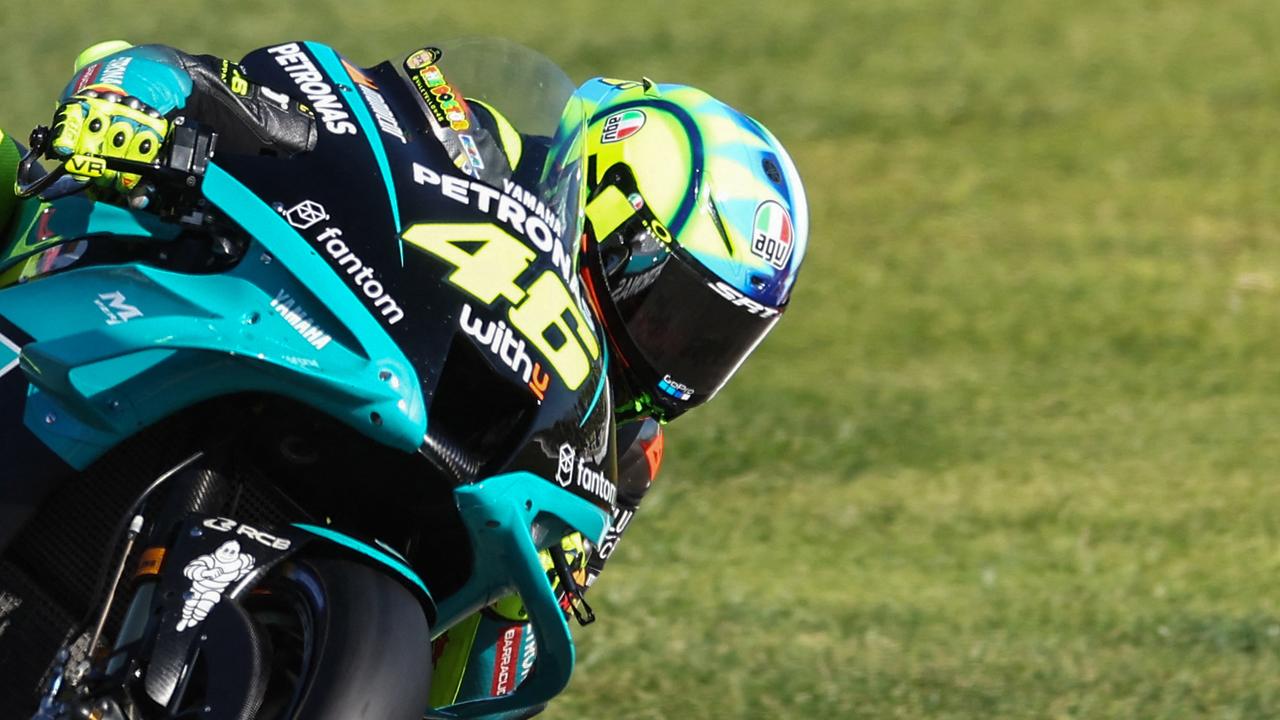
If you failed to dip into the career of Valentino Rossi you missed a very special odyssey. Like a leather-bound Muhammad Ali it is hard to think of another sports star who married such a vibrant personality with courage, mischief and swaggering talent. Look at some of the other all-time greats and they seem to suck the joy out of sport. For the Italian that was what it was all about.
The achievements were unparalleled – a record 89 grand prix wins in the premier motorcycle racing class; a record 199 podiums; 432 starts; nine world titles in all; victories on seven different bikes; the only rider to have won races on 125cc, 250cc, 500cc and MotoGP bikes. He said he could have won more often had he tried as hard as he had in recent years, but added: “I think it’s normal when you’re younger, you’re more of a dickhead.” The numbers only scratch the surface.
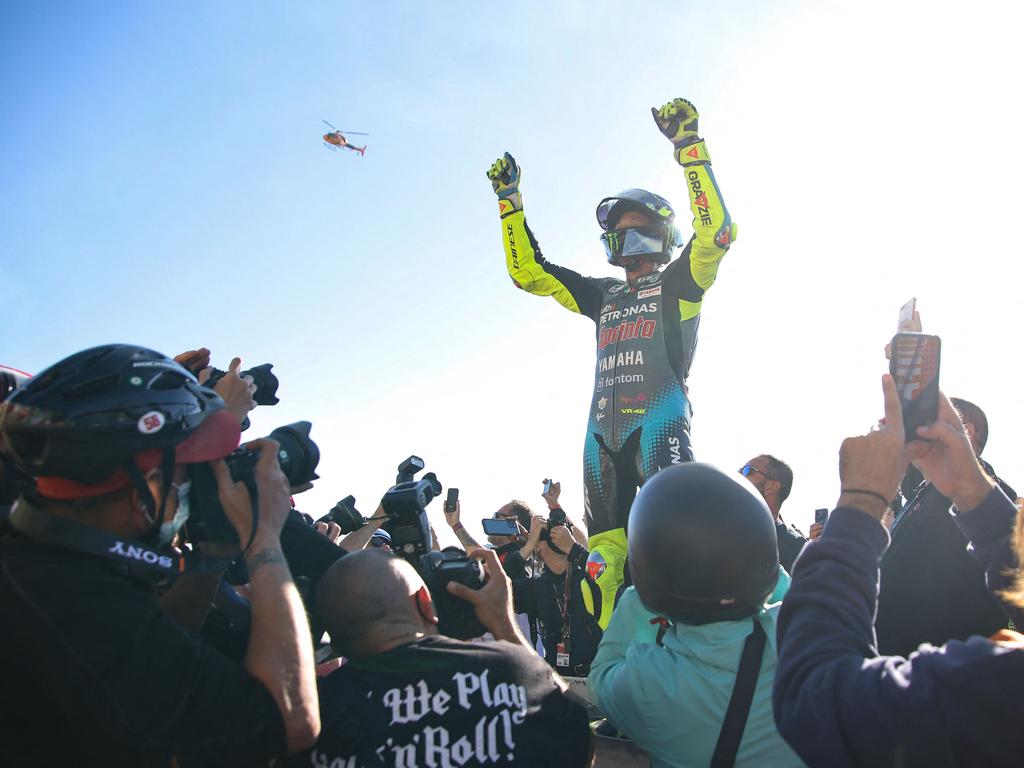
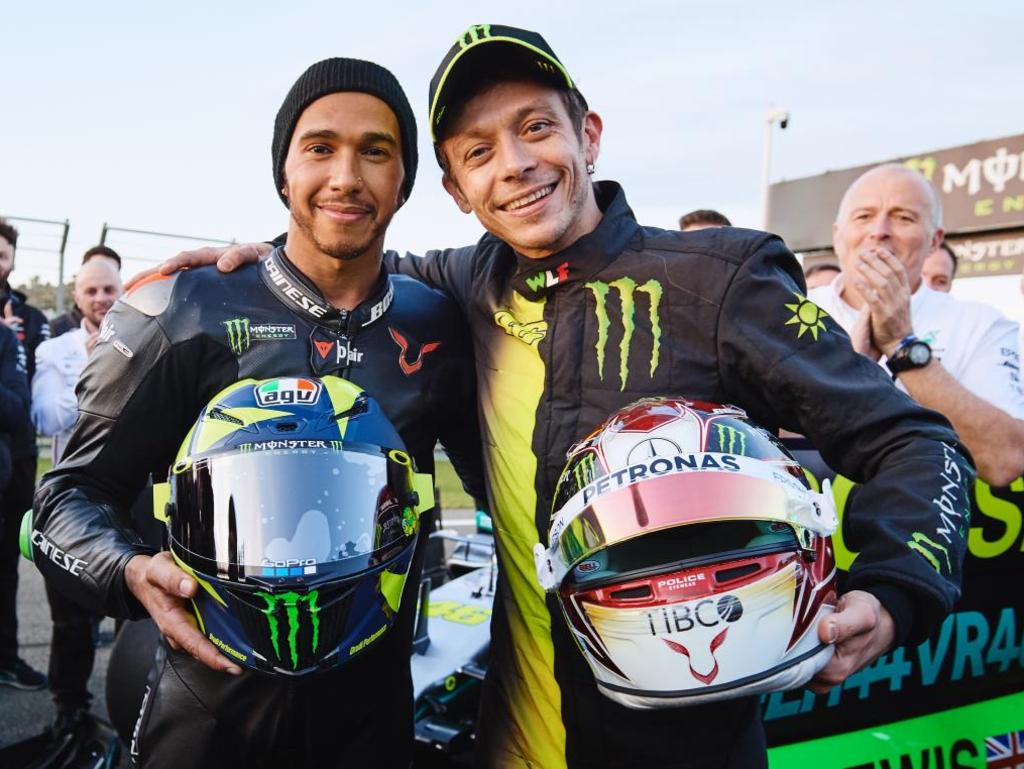
The tribute messages in a post-race montage came from Tom Cruise, Lewis Hamilton, Roger Federer, Andrea Pirlo and many more. His old manager once likened him to Buffalo Bill and Jesus Christ. He appeared on the cover of Rolling Stone dressed as Elvis. He appeared on the podium at Donington Park dressed as Robin Hood. His idols included Steve McQueen, Jim Morrison and John Belushi. He once told me he planned to retire by the time he was 27, but was 42 by the time he called it a day after finishing in 10th place in Valencia on Sunday.
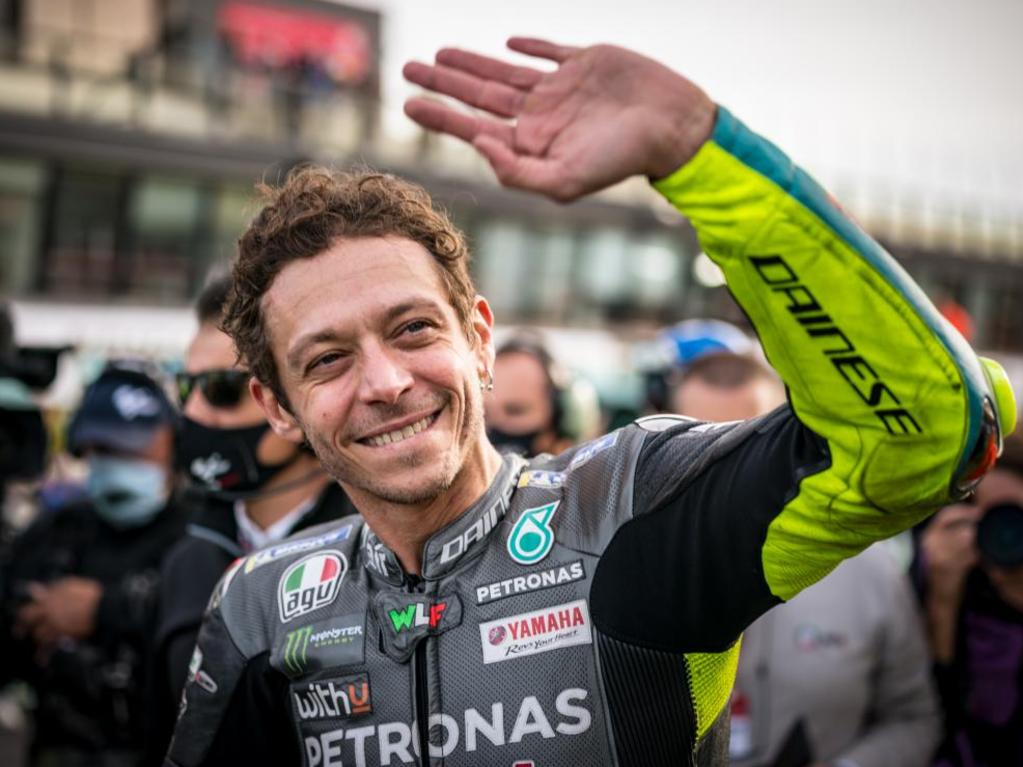
Rossi mixed tragedy and comedy, coming back from the appalling fatal accident when he collided with the stricken figure of his friend, Marco Simoncelli, in Malaysia in 2011 on the one hand, and installing an inflatable trackside swimming pool, complete with palm trees, for the Hawaiian branch of his fan club on the other.
He had millions of fans but the official fan club was originally a bunch of old drinking buddies from Tavullia near Rimini. Each year the entire town would walk to Misano for the San Marino Grand Prix. Go to Tavullia and many of the buildings are painted yellow in honour of his old Honda livery while the speed limit is 46kmph as a nod to his number. The church bells sounded whenever he won.
He called his closest friends the Tribu dei Chihuahua and they dreamed up the post-race stunts. There was the time he dismounted on his victory lap in Jerez to nip into a portable toilet watched by tens of thousands; the time the Tribu got official police uniforms from Tavullia and booked him for speeding in the pitlane; standing up on his footrests and playing an imaginary violin; dismounting and checking his bike over with a stethoscope.
Some of these stunts cut deeper. He detested Max Biaggi, his compatriot and first great rival, and when the Roman was dating supermodel Naomi Campbell, Rossi celebrated a win by making a victory lap with a blow-up doll with the words Claudia Schiffer dubbed on the back. It was crass and puerile and fun. It also worked. Rossi was under Biaggi’s skin long before they had exchanged blows behind the podium in Barcelona in 2001.
Sete Gibernau, runner-up to Rossi in 2003 and 2004, was also mocked, undermined and beaten, both on the track and in his head. At Qatar in 2004 Gibernau’s team complained that Rossi’s team had illegally cleaned his grid spot. When Rossi won he dismounted, pulled on a T-shirt adorned with the words ‘La Rapida Cleaning Services’.
Then he was handed a broom and proceeded to sweep away at the tarmac in a pointed message to Gibernau. Just to add to the melodrama, he vowed that Gibernau would never win again, something that became known as the Rossi curse when it turned out to be true.

He was utterly ruthless. The move he made on Gibernau on the last corner at Jerez in 2005 was borderline brutal. It ended with his handlebar wedged into the Spaniard’s arm. Gibernau ran off into the sand and 127,000 raged at Rossi. He did not care. He used his position to push for greater safety for riders, but he never pulled a punch until perhaps the last year or two. It was great to see Casey Stoner, a two-time world champion, working for BT Sport at the weekend and, beneath the tributes, you could tell he still feels wronged when asked about the duel with Rossi at Laguna Seca in 2008.
That was one of the greatest races I have ever seen in any sport, two athletes swapping places, inches apart, bikes lowered to angles that meant they were nanoseconds from disaster, kicking up dirt on a mesmerising corner called The Corkscrew. Rossi won. Stoner felt he had gone too far and refused a handshake. “This is racing,” said Rossi with a smile. “This is racing huh?” replied Stoner. “We’ll see.”
Rossi has been past his best for some time but now nurtures new talent on his ranch. He plans to race on four wheels – he has competed in rallying and had test driven for Ferrari in Formula One. He was one of the most alive people I have ever met, eyes always playful, often peppering his speech with “it is funny” and “feck” and “anyway, I arrive first”. To win back-to-back races and titles for different manufacturers proved the pureness of the talent, something not always easy to gauge in motorsport.
I remember sitting down with old crew chief, Jerry Burgess, a wily Aussie who explained what made Rossi great. “It’s the little things driving the section of the brain that processes information,” he said. “The electric pulses that send messages to Valentino and Roger Federer are far faster than in you and me. If he started playing tennis when he was three and Federer had a bike then the results would be the same, but the names would be different. Sport is a constant correction of small mistakes, but you have to know you’re moving into a mistake before you can begin the correction process.” In other words, Rossi was a genius at catching his falls, a sort of trapeze artist for the post-circus age.
The other thing that made Rossi great was he never lost the love and remained a sporting romantic. “I’ve never seen my bike as a piece of iron,” he once said. “Yes, we could say she’s a woman. And just like a woman, she can be naughty, you can argue with her, but she can also greatly reward you. I talk to my bike, especially at night, in the box. And always before a race I kneel beside her and cheer her on. Because from then on it’ll be just me and her. At the end of the race, I always thank her.” A one-off.
Five reasons to love Valentino Rossi
1) The lucky rabbit
In 2007 Rossi turned up with furry yellow numbers on his leathers. “In the past we have always managed to pull a rabbit out of the hat,” he explained. “Last year we tried to understand why we couldn’t and realised it was because the rabbit had died. So now he is on my back.”
2) The Father
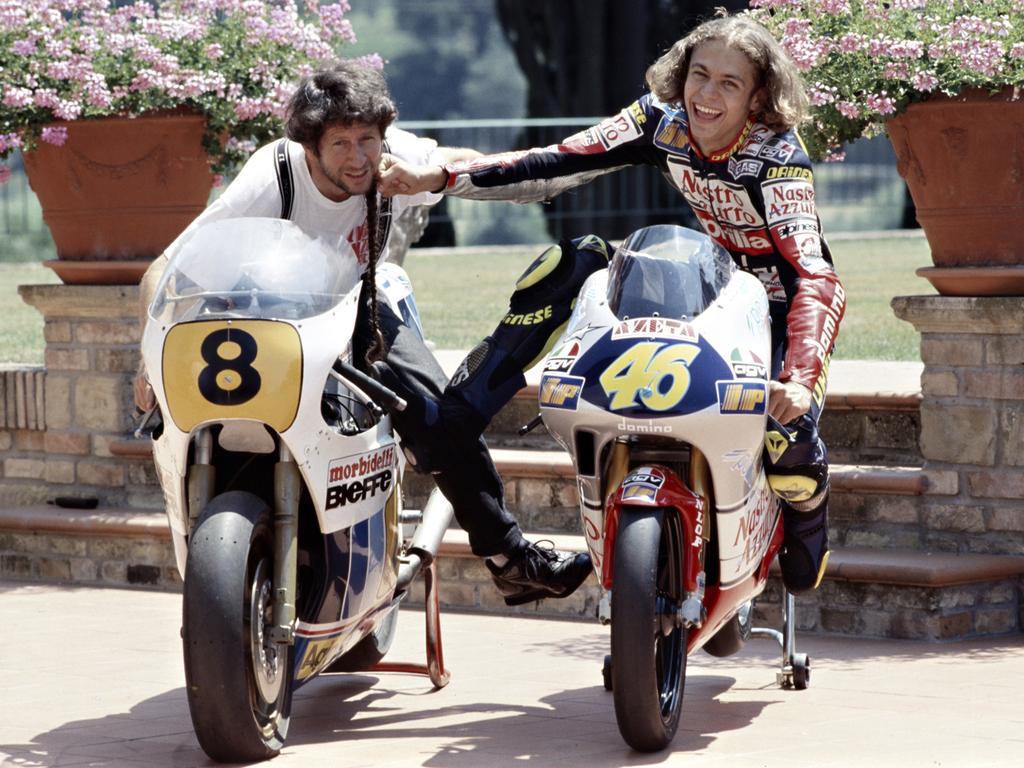
Grazianio was an old GP racer, but even when his son was a megastar he would turn up to GPs with his ponytail down to his waist and insist on sleeping in the back of his beat-up old car. Another maverick.
3) Mike the bike
Rossi has his heroes and foremost among them was Mike Hailwood, Britain’s multiple motorcycle world champion and Formula One driver. When Rossi equalled Hailwood’s tally of GP wins, he circled the Sachsenring with a flag bearing the message: “76 Rossi, 76 Hailwood, I’m sorry Mike.”
4) China crisis
A delegation of Yamaha dealers arrived at Shanghai for the first China Grand Prix in 2005. They had been promised an audience with Rossi who said he could not spare the time on the eve of such an important race. Late that night the Yamaha top brass were thus surprised to see Rossi in the same club. He stayed out until about 4am. The next day he won the grand prix.
5) The legacy
Rossi has inspired a generation. On Sunday Francesco Bagnaia won the last race of the season. He is a graduate of Rossi’s rider academy set up to foster young Italian talent.
- The Times

Feeney might have cried – but there’s no going back for Supercars

Piastri the next F1 champion? Aussie bookies say no

McLaren boss snubs Aussie motorsport with Supercars exit

Where Piastri sits on F1, Aussie sport rich list after breakout season

First look: New Toyota Supra’s critical testing ahead of Supercars
