
Alex Peroni survived a 220km/h Monza crash and is now pursuing the 24 Hours of Le Mans
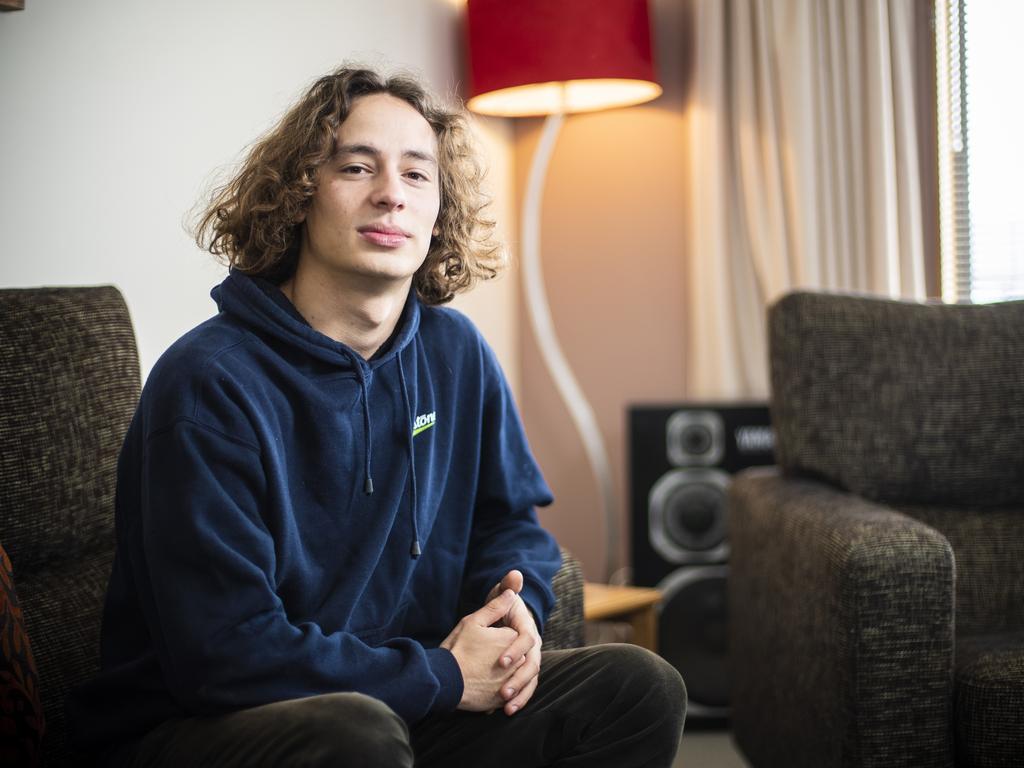
Alex Peroni couldn’t have known that he was about to make global headlines, nor imagined that his Formula 1 dream would be over two years later, replaced by the pursuit of another iconic racing event.
Strapped into a Formula 3 car travelling at 275km/h down Monza’s back straight, Alexander Peroni braked for the iconic Parabolica corner barely 50 metres before turning in.
He shifted down a few gears, kissed the apex, opened the steering, and made a good exit down the long front straight.
At least, that’s what had happened until lap 18. He couldn’t have known that he was about to make global headlines, nor imagined that his Formula 1 dream would be over two years later, replaced by the pursuit of another iconic racing event.
September 7, 2019. The closing stages of the first F3 race of the weekend, a day before the F1 Italian Grand Prix. The Tifosi – fanatic Ferrari fans decked out in red – were already raucous.
Peroni started 18th. After a storming drive, he was running sixth and on for his best result of the year. He was in a battle with Brazilian Pedro Piquet – son of triple F1 world champion Nelson Piquet – when he ran wide at Parabolica on wearing tyres.
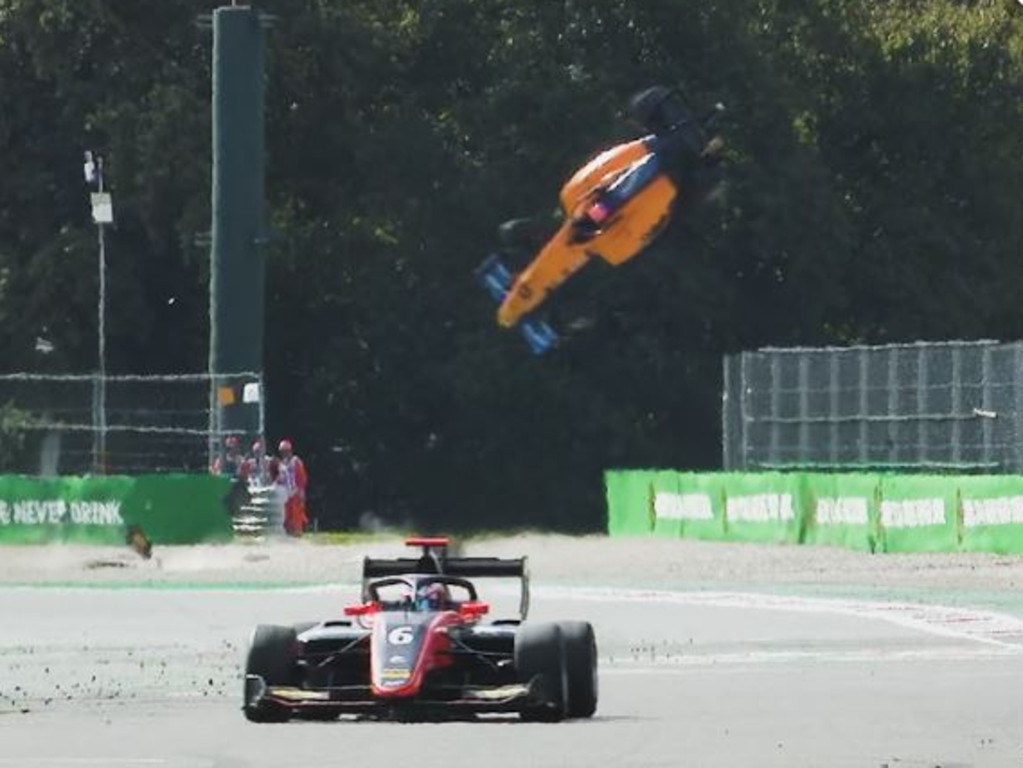
He struck a sausage kerb – essentially a speed bump on the outside of the corner, to deter drivers from flouting track limits – and was launched into the air at 220km/h.
His 700kg car pirouetted as it flew more than 100m before crashing into a sponsor banner and a catch fence, coming to rest atop a tyre barrier. It now resembled a canoe.
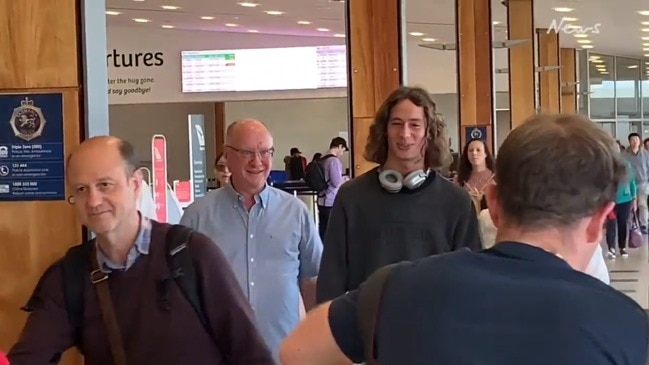
Just over two years on, the 22 year-old from Hobart remembers little of the shunt.
“I guess I got knocked out when I hit the kerb, so I don’t have memories of it,” he says.
“I was pushing hard to keep Piquet behind me … I was struggling with my rears, I went a bit wide. I saw the kerb and because you’re on the edge of grip, you can’t go to the inside of it. I remember thinking, ‘If I lift and go wider onto the marbles, I’m definitely going to lose one position, but who knows’. By then I had made the decision, I kinda have to go over it … and yeah, that’s the last thing I remember.”
Peroni says he has a small “screenshot” burned into his memory from when the car came to rest on top of the barrier.
“But my first real memory after the crash was on the way to the hospital,” he says.
“In hospital, I was confident I’d be able to race on Sunday; I thought I was in hospital for a check-up but then I learned I had fractured a vertebra. Obviously I was in a lot of pain but I didn’t really realise what had happened. I knew I’d had a crash or something but everyone around me was very panicky.”
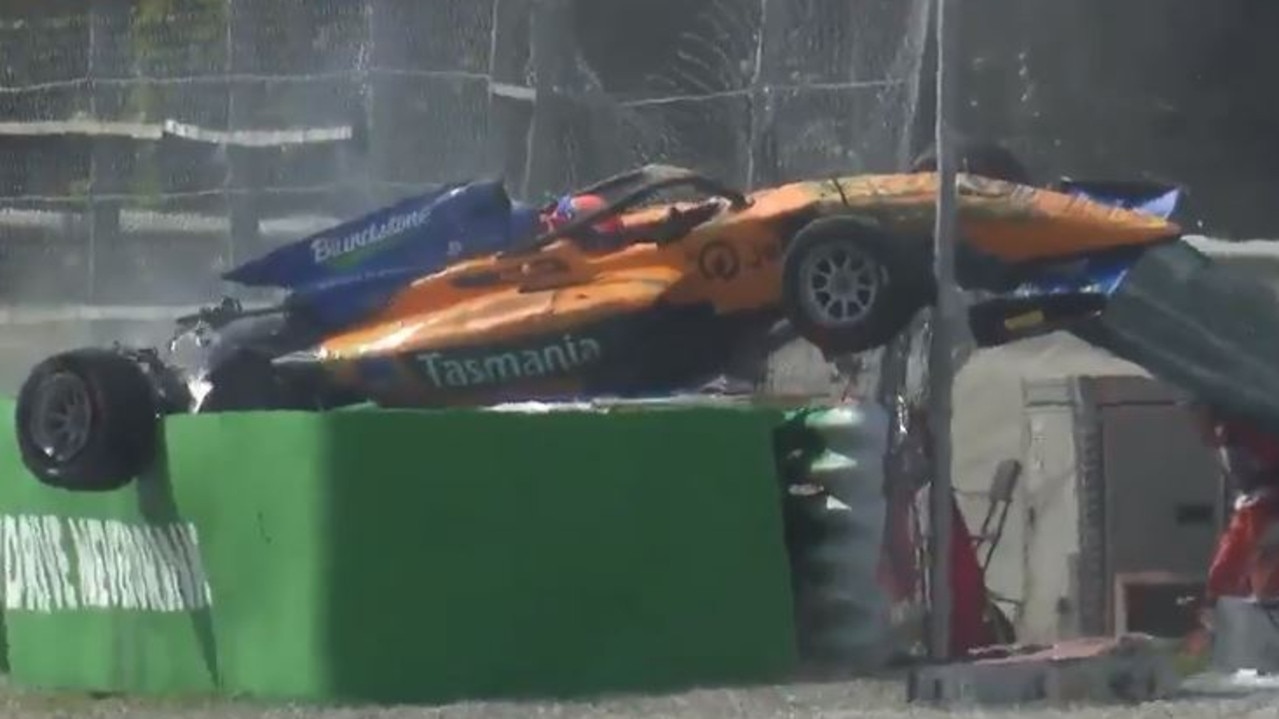
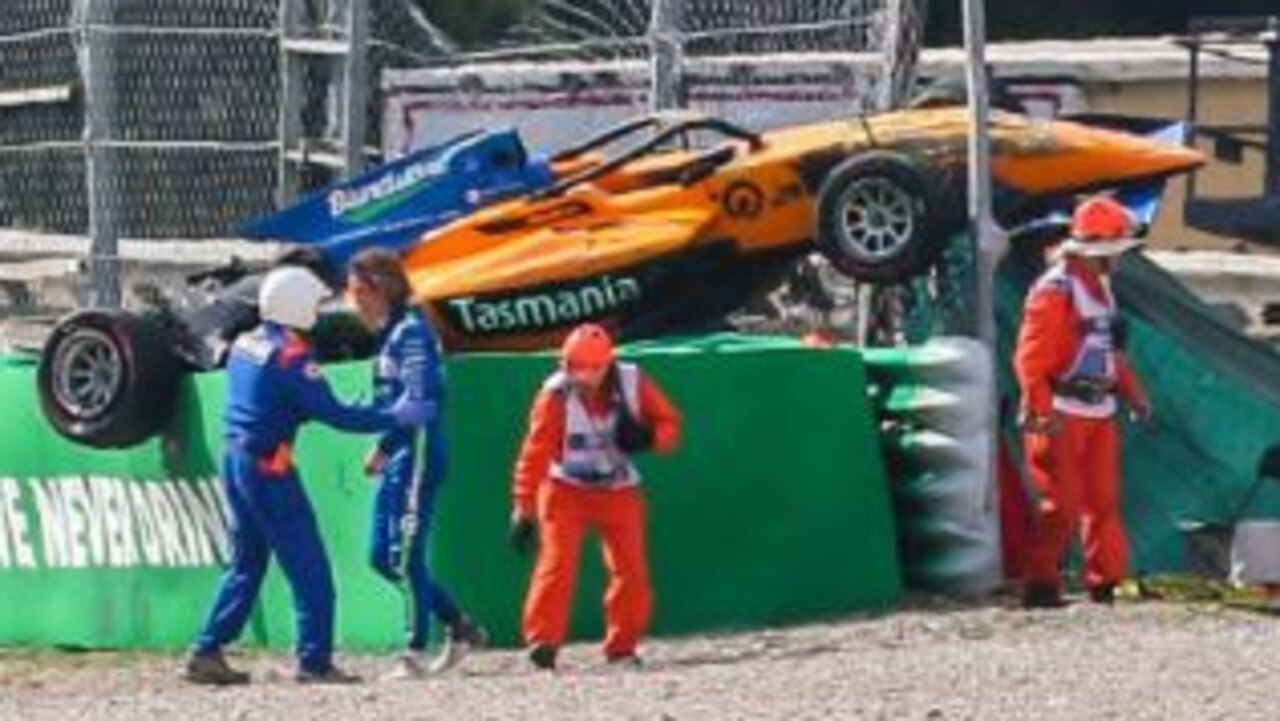
It wasn’t until he watched a replay that he realised the severity of the crash, which was all over the news both in Europe and Australia. Peroni missed the weekend’s second race and also the season finale at Sochi.
To that point, Peroni’s debut season of Formula 3 looked solid. He’d had top-10s at Silverstone and Paul Ricard. His competitors included Yuki Tsunoda, now in F1, plus F2 drivers Liam Lawson, Richard Verschoor, Jake Hughes and Robert Shwartzman (now a Ferrari test driver).
But for Peroni, solid wasn’t enough.
“You’re a competitor, and you race to win and to race at the front. Obviously there are certain things that stop you doing that or getting there … but overall 2019 was a difficult season,” he says.
“Then to cap it off with the crash, 2019 was probably the hardest year of my career.”
Chasing an addictive dream
Peroni was first introduced to motorsport by his dad, Piero, who himself had dabbled in racing. Baskerville, a 2km bullring north of Hobart, was the first live racetrack he visited.
“At the bottom end of the track there’s a big hill, so everyone goes there and parks their car and you watch the racing from your car,” he says. “I remember sitting on the roof of my dad’s Ford Telstar and I would just sit there all day, eating a Dagwood Dog.”
The classes he watched included Improved Production; HQ Holdens and Formula Vee. Ever since that day at Baskerville, motorsport had his heart.
“Cars were all I ever cared about. Looking back now at old school books mum kept, I think every Monday morning one of my teachers would get us to write a small thing about what we did on the weekend,” he says.
“Mine was always, ‘OK, we went to this track’, or, ‘I watched this race on TV’, or, ‘I saw this car on the road’. I was crazy for it. Addicted.”
Peroni began hassling his father for a go-kart and his persistence was rewarded at age seven. He joined the Southern Tasmanian Kart Club in Orielton, working his way through the junior classes. Annual family holidays to Europe became racing trips with a bit of leisure on the side.
His results in overseas karting – which included a world championships tilt – were solid enough and it was after one of these ‘holidays’ that the wheels of Peroni’s career were set in motion.

Piero Peroni took a call from Torino Squadra Course, a team in the Italian Formula 4 Championship, who had seen Alex in karting and wanted him for the 2015 season.
“When I was racing karts, I’m just racing and having fun. Obviously I want to get to Formula 1, it’s the dream; but when you’re a kid, you’re very in the moment, you don’t think about the steps or anything. I had no idea about Formula 4 or anything,” he says.
He had to learn. At just 15 and speaking “minimal” Italian, he jetted out of Hobart and into the unknown. That first year was a steep learning curve for Peroni; his first in cars and his first time living away from his family. He stayed for a few months with his team owner’s mum, who spoke no English.
“I was in Grade 10 that first year. All my mates were at school, having fun … I still studied online but being away from them was hard.
“But I guess, being that age, you’re just ignorant and naive. I was there having fun and racing a bit. I was lucky I met some amazing people in that team who were all supportive of me, who I’m still mates with today, so that helped a lot.”
Yet on-track results were hard to come by. The TS Course team was small and Peroni’s drive mostly self-funded, with few sponsors. Season highlights included second-place finishes at Imola and Misano.
But in 2016, his European adventure took off.
Graduating to the Monoplace Challenge – a French series running Formula Renault machinery – with his TS Corse team, Peroni dominated. He won 14 of the 21 races, including six-straight wins to close out the season. It was enough to convince the team to enter him in the final round of the Formula Renault Eurocup season at Estoril, where he scored a brilliant fourth place.
Peroni joined Fortec Motorsport for a full-time campaign in the 2017 FR Eurocup season. He started strongly – even earning a pole and a win on the streets of Pau – before enduring a difficult second half of the season. He finished 10th in the championship.
A move to MP Motorsport for 2018 saw results improve only marginally. But it did bring arguably the biggest win of his career: on the streets of Monaco, on the undercard to the F1 Grand Prix.
“It’s such a high to win at a place like Monaco,” Peroni says. “It’s always great for your career to win at Monaco in anything.”
He graduated to F3 for 2019 and his first season with Campos reaped just two points finishes – an eighth in France and a 10th at Silverstone – before the horror Monza shunt ended his season early. He finished 20th in the drivers’ standings.
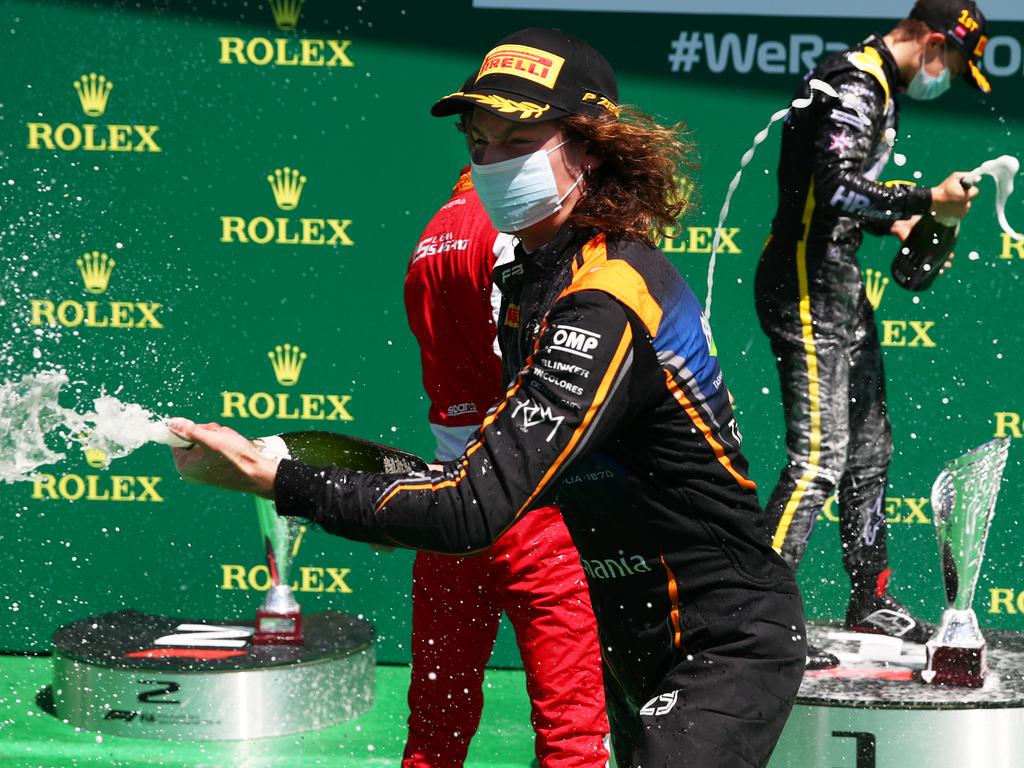
He remained with Campos for the Covid-delayed 2020 season and started with a champagne pop, rather than a bang. In his first race back since the crash, Peroni finished third at Austria’s Red Bull Ring, setting the fastest lap.
Unlike Formula 1, Formula 3 is a spec-series, meaning all teams are running identical cars. That includes the engine, suspension, wings and electronics; yet doesn’t necessarily mean that all drivers have the same opportunities to win.
Some of the bigger teams run mostly drivers signed to junior driver academies run by F1 teams. Prema – which took fellow Australian Oscar Piastri to the F3 title in 2020 then the 2021 F2 crown – has strong ties to Ferrari.
Running in the category for a second year meant Peroni was able to overcome some of these disadvantages. He grabbed podiums at Silverstone and Barcelona, as well as a top-five on his return to Monza.
“We were able to fight for the podium on the majority of weekends but it was just disappointing we had a couple of weekends where we were just nowhere. It was those weekends that hurt us at the end of the championship,” he says.

From Monza to Le Mans
The road to Formula 1 is a twisty, complicated beast. To be the best driver is rarely enough. Bringing money, usually in the way of sponsorship, is essentially a requirement for any driver not attached to the young driver program of a top F1 team. There’s no denying that Peroni had the talent, but it was the distinct lack of budget that likely ended his F1 dream; at least through the traditional European ranks.
In an effort to get to F1 through the backdoor, Peroni took a punt and joined British team Carlin in the US-based Indy Lights, the feeder series to IndyCar, for 2021.
The US-based IndyCar series is arguably the most popular open-wheel category outside of F1. It has, until recently however, had a reputation of being a landing pad for F1 rejects.
The 2021 grid was stacked with talent and included seven-time NASCAR champion Jimmie Johnson; former champions Sebastien Bourdais, Scott Dixon, Ryan Hunter-Reay, Will Power, Simon Pagenaud, Josef Newgarden; and long-term F1 driver Romain Grosjean.
Also, some Kiwi called Scott McLaughlin.
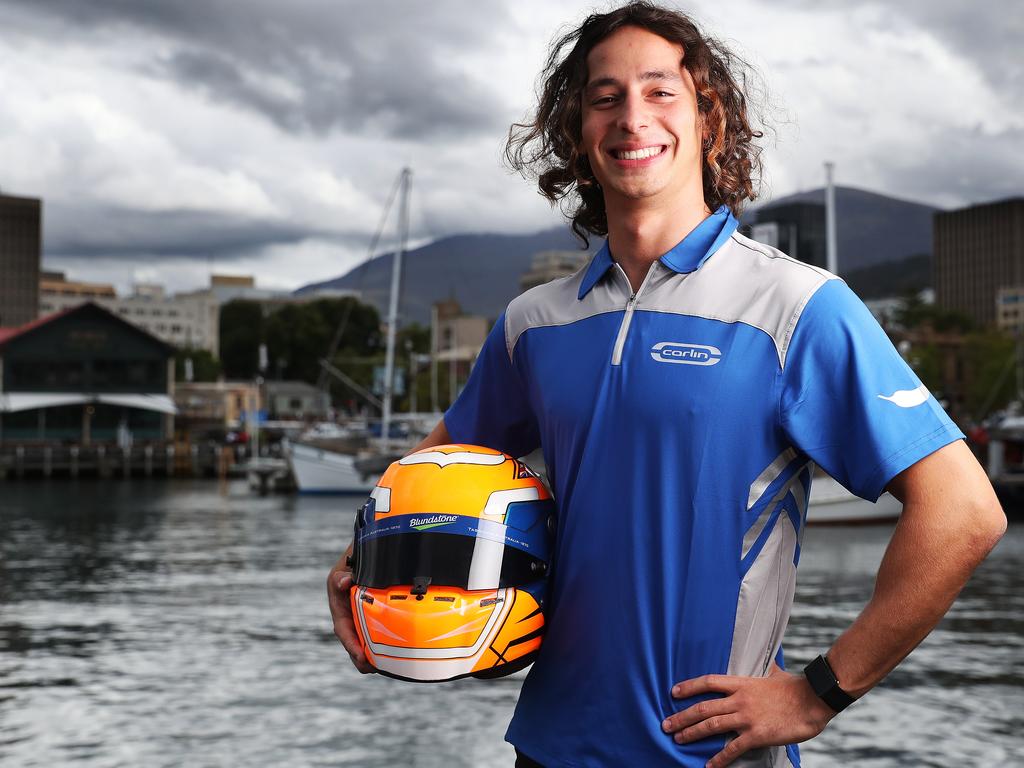
Peroni’s grand plan was to make the step to IndyCar and if he did well, look at F1 options. Yet his 2021 Indy Lights campaign was far from ideal.
Carlin, who won the title with now-IndyCar driver Ed Jones in 2016, had been out of the series for three years. Although the cars were still the same, the development progression made by other teams in that time meant Carlin were lagging well behind.
Peroni’s only real highlight was a podium on the road course of the famed Indianapolis Motor Speedway, home of the Indy 500. He did not see out the season.
In September, Peroni announced an early exit to return to Europe. His eye had turned firmly to sports cars, with an eye to racing them – potentially at the iconic 24 Hours of Le Mans – in 2022.
“It’s always been a dream to race at Le Mans and our focus has definitely switched to that form of racing,” he said, in advance of making the shift concrete.
Earlier this month, he announced that he would be driving in the LMP2 class of the European Le Mans Series (ELMS), for G-Drive Racing. G-Drive won three straight ELMS LMP2 championships from 2016-2018 and are defending champions in the LMP2 Pro-Am class.
Peroni’s Le Mans ambitions lie solely in the hands of the Automobile Club de l‘Ouest, the organising body of the twice-around-the-clock race. The ACO must first accept G-Drive’s Pro-Am entry.
Peroni will be following in big footsteps if he gets to race at Le Mans, where simply finishing is an achievement. Australian motorsport legend Mark Webber placed second in 2015, the year he won the World Endurance Championship for Porsche with Timo Bernhard and Brendon Hartley. Webber was at the back end of his career, having already raced 12 seasons in F1 for nine grand prix victories.
Yet Peroni’s shift away from single-seaters towards endurance racing is more or less an acceptance that his F1 ambitions are over, little more than two years on from that extraordinary F3 crash.
“The American stint was kind of the last hurrah, I guess, at open wheelers,” he says. “We thought we would have a go and if it works with Carlin, that’s great; if it doesn’t, we knew we would be able to come back to Europe and focus on endurance racing. The F1 dream … has kind of fizzled out.”
Peroni’s name is likely on the extensive list of capable drivers who will never get a chance in F1, but his adventure in elite motorsport isn’t over yet.
With time still on his side, a successful career in sports cars is there for the taking, starting this year.

Feeney might have cried – but there’s no going back for Supercars

Piastri the next F1 champion? Aussie bookies say no

McLaren boss snubs Aussie motorsport with Supercars exit

Where Piastri sits on F1, Aussie sport rich list after breakout season

First look: New Toyota Supra’s critical testing ahead of Supercars
