
Netball Australia CEO Kelly Ryan discusses Hancock Prospecting controversy, grand final sale and ambitious growth plans
After a year of headlines and high drama, netball is looking forward to a future of growth and change, writes LINDA PEARCE.


Ten days out from Super Netball’s opening whistle, LINDA PEARCE sits down with Netball Australia CEO Kelly Ryan to discuss some of the sport’s key issues, including finances, participation, that sponsorship controversy and Brisbane 2032.
Linda Pearce: You’ve come from an AFL rather than netball background. Now that you’ve had a full season with your feet under the desk, what has surprised you heading into the next one?
Kelly Ryan: The amount that the sport does, on very little, is absolutely remarkable; the commitment that everybody contributes to netball behind the scenes to make it work. So what we do on the scale that we do, with the resources that we have, and that’s everything from participation to everything we do trying to deliver at the elite end was nothing short of remarkable,
That also creates challenges, because when you have a huge appetite for growth and for change it’s really hard to instigate that at speed because of the foundations which you’re working from, so obviously the financial challenges are something we continue to be mindful of. We would love more resources to keep investing in the game and that’s what our focus continues to be, but also very mindful that we need to make sure we’re working on the right things.’
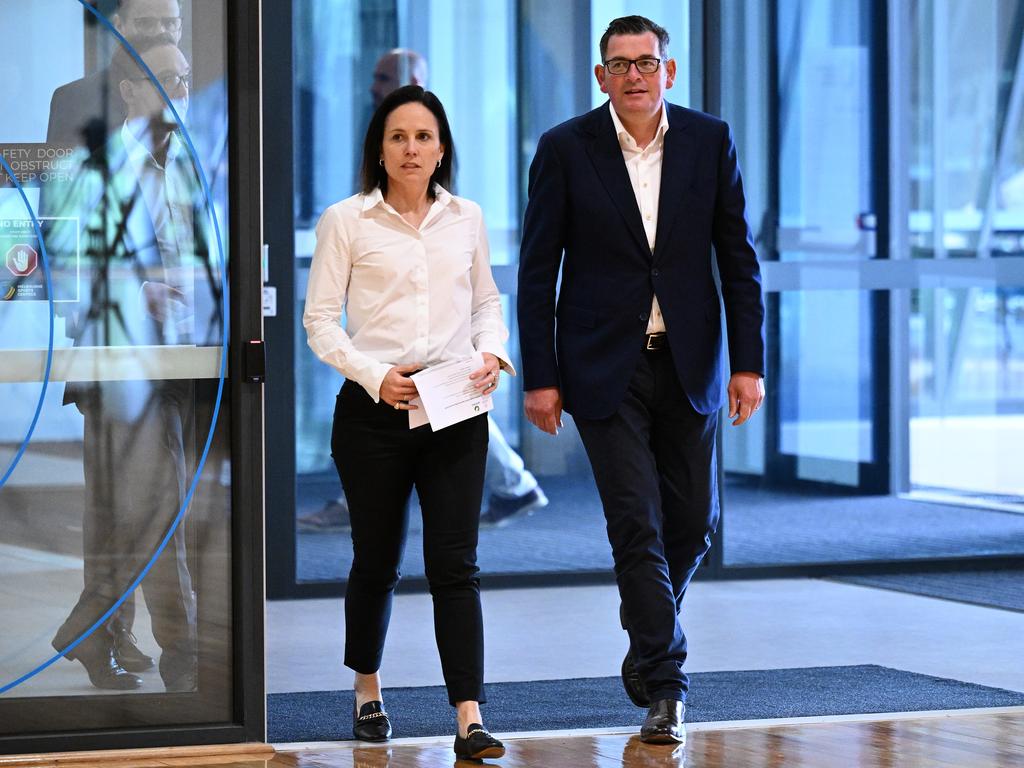
LP: In 2022 you announced losses of $7.2 million in the previous two years. What is NA’s current financial position, bearing in mind the withdrawal of the Hancock Prospecting sponsorship and subsequent bailout from Visit Victoria? (Bottom line: $4.2 million of current debt).
KR: We’re definitely rebuilding, and we’re going to be in a much better financial position as a result of 2022 than we were in 2021, so that growth is what we’re essentially just trying to realise in every part of the business. Financially we’ll be in a much stronger position — notwithstanding that we do have some historical debt that we have to be very mindful of and need to stay focused on repaying that, but we have made monumental improvement in terms of the finances of the sport.’
LP: The Donnell Wallam/Hancock story was obviously the big one of 2022. What are your takeaways now that you’ve had some reflection time and what impact did it have on the sport, ultimately?
KR: Of course we’ll take learnings from it, we hope the whole sport has taken learnings from how we do this, but it was also a really unique situation where no sport had found itself in that position, either, so it’s impossible to draw comparisons with how other people have dealt with it. We just take learnings from what we experience and how we will do things differently obviously is very much at the forefront of what we would contemplate, but at the same time it was such a unique situation to be in that I’m not sure it will be repeated.
LP: A private equity group sought to buy SSN last year, and outlined some of their plans, but NA elected not to engage. What is your vision for the short and long-term future of the competition in terms of list sizes, number of teams and so on?
KR: The vision for netball is nothing but growth. We have to continue to have a growth mindset, and we have to continue to challenge the way things have been done. Seeing our brand campaign, we have to change what people’s perceptions are.
So we have to go right back to some basics around netball being perceived as a “nice” sport, with lots of “nice” people playing it. It is a nice sport, but at the elite end it’s nothing but fierce, so we want to continue to grow every aspect of the sport just to allow us to reinvest in it.
When we talk about SSN specifically, we proactively talk about the size of the competition, be it season length, be it the number of teams, be it the number of athletes participating. That is absolutely a part of our future vision.
What we haven’t done is put specific deadlines next to each one of those aspects because we need to be a bit more methodical and planned around how we can make that growth transpire within what we know are some of our fixed environments, (such as) we’ve got a fixed broadcast deal to the end of 2026.’
— Suncorp Super Netball (@SuperNetball) March 6, 2023
LP: So, to clarify, no plans for extra teams before the end of that current deal?
KR: Not yet. Don’t have the definitive. Have the appetite for more teams, absolutely. Have the appetite for longer seasons, but there’s a lot of other things that need to be worked out behind the scenes, and we have to take into consideration what the international calendar looks like from a world perspective …
And we actually have to play a much bigger role globally to make sure that we can get the whole sport moving in the direction that we can actually carve out some clear definitive space for our domestic competition and have really clear windows around when international competition should be run.’
LP: As the AFL grapples with potential expansion into Tasmania, is there a place that netball would ideally get to next?
KR: We don’t have a priority place. I think that’s the beauty of what comes next, is that we’ll be really open-minded around what growth looks like and where growth transpires.
We certainly have no shortage of interest. The amount of phone calls and conversations that we have around ‘When you’re ready, we’re ready’, means we know there’s going to be a huge appetite for additional licences once we’re at that stage.
LP: Men and boys are a big part of the Brisbane 2032 Olympic push (given AOC heavyweight John Coates’ public lack of enthusiasm for netball’s bid for inclusion due in part to its lack of diversity). Is that the reason they’re being embraced more now?
KR: Not at all. I fundamentally believe, as do so many people in our sport, that it’s a necessity. Why would you have a cohort that didn’t feel included in your game? We genuinely believe that we are the most inclusive and can be the most inclusive sport that exists.
There’s very few sports that can have men and women on the court at the same time participating in the exact same game, so the benefits of netball far outreach just whether we hit the Olympics or not.
Whether we’re in the Olympics or not will not define the success of netball across the next 10 years. It’s a great ambition to have. It’s one that we absolutely should be aspiring to achieve, but men and boys feeling like they are welcome and embraced in our sport is an absolute necessity to the sport’s growth.

LP: What is the sport’s biggest challenge, currently?
KR: We have a huge appetite for growth, so our ability to grow commercially is a huge opportunity but also continues to be a really big challenge. Women’s sport is still not valued at the same level that men’s sport is, that’s just the reality, so we are working hard to make sure we can create that narrative that continues to showcase women’s sport as the power that it actually is and can be but it’s still taking some time for that narrative to change, more broadly.
So we will continue to lead, we will continue to try to challenge the norms and the traditional ways of measuring women’s sport and make women’s sport realise its commercial realities.’
LP: How concerning is the potential talent drain to other codes given netball’s long standing status as the highest participation sport for women and girls?
KR: I think it’s fantastic (that) the narrative around women’s sport is finally relevant. Netball’s had to go it alone for 96 years, where no-one was interested in women’s sport, yet netball continued to find a way and continued to push forward on all their causes, especially around gender equity, etc, so netball’s been in challenging positions its entire existence.
This is just another iteration of what challenge looks like, but we are big believers that more women and girls playing sport is a huge benefit in so many different ways. We have an amazing product, we know that, and we back our product in to still continue to remain as strong as it has ever been, regardless of what other sports are participating now.

LP: Do you ever see a return to the system where the winner of the major semi hosts the SSN grand final? Or, following the success of WA buying the rights to a decider they would have qualified to host anyway, do you expect it will always be up for sale from now on?
KR: Never say never, obviously. You’ve got to be able to adapt to whatever that moment in time tells you. So, right now, the approach that we’ve taken is to be much more considered from a commercial perspective; we believe that people should value the content the way that we value it, hence why we took the step into the space really quickly last year.
So right now I think the model works and we want to give it time to prove itself, prove that netball fans will travel for the grand final when they have the benefit of planning. Allow us to put additional experiences around the grand final so it becomes a destination regardless of who’s competing in it … By fixing it gives us the best chance of success for it to be a real pinnacle event, so we want to stay committed to that for now.

LP: An NA spokesman recently confirmed plans for a wage freeze in the next CPA, due to be finalised later this year. Why, and is that fair?
KR: What we’ve said is that nothing materially has changed in the sport, so when your biggest revenue stream is your broadcast deal and that’s fixed for the next three years, and then there hasn’t been material growth in terms of the other commercial opportunities, and with the financial pressures that we’re (under), what we’re saying is that any investment into netball has to be dedicated to the right space.
So it’s very early in terms of the conversations of how it transpires, and we just need to make sure that we do our due diligence as a sport to make sure we’re investing in the right areas.
LP: In 2020, before your time, the Super Shot was one of several initiatives introduced without any consultation with the players. Last year, the ‘For Sale’ sign was put on the grand final without consulting the players. What will the process be the next time there is a big decision to be made?
KR: Can’t speak to the Super Shot, but if there’s two major markers in the 25-year history of competition and they’re the two things that have caused the greatest amount of angst, I’d say that that’s not a bad result.

What I would say is that we have to be aware of what everyone’s role is in the sport and that when we make decisions we make them in what is in the best interests of the sport.
So there is a wide stakeholder base and obviously we do try to keep people informed and updated, and that’s what we’ll continue to do. We’ll continue to educate, we’ll continue to inform, but when decisions have to be made, we’ll make them. Someone has to make them. We understand that that’s our role.
We know that every decision is not going to be a well-received decision, but I can only ever make the assurance that we’ll have considered every permutation of the decision and the one that we end up making is the one that we genuinely believe is the right thing for the sport.

‘Not in the gutter’: Netball star fires back at haters

Opinion: Why Tassie’s had enough of being the support act

The self-confessed ‘netball nerd’ stepping into the Mavs’ hot seat

Diamonds lock in powerhouse series ahead of Comm Games

The making of Gerard Murphy – and why he’s ready for Mavs challenge
