
Kansas City Chiefs star quarterback Patrick Mahomes is a half-billion dollar bargain
The Kansas City Chiefs signed their star quarterback to the type of mega-contract that can cripple a franchise. They’re back in the Super Bowl because he’s still undervalued.

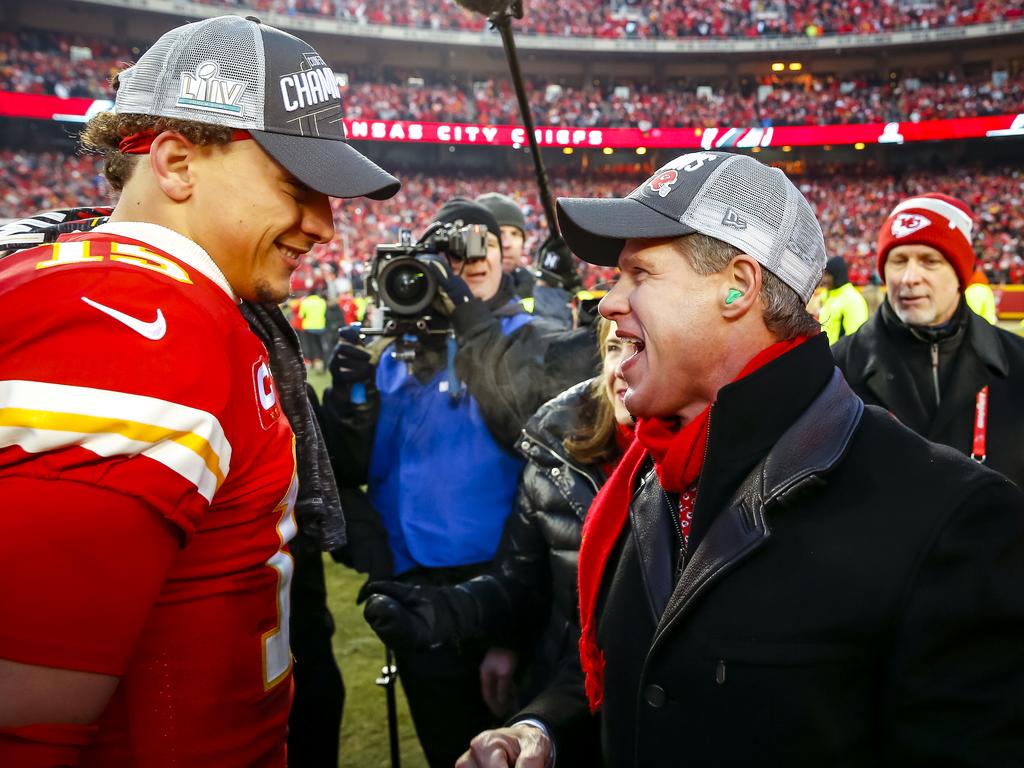
The last time the Kansas City Chiefs won the Super Bowl, they didn’t have much time to celebrate before they had to answer a question that would determine the team’s future: How much would they have to pay Patrick Mahomes?
The price of keeping their phenomenal young quarterback turned out to be a 10-year deal potentially worth more than $500 million, a contract that was unprecedented in size and scope.
That deal in 2020 was exactly the sort of decision that could have handcuffed the Chiefs. When NFL teams devote a huge part of their salary cap to one star player, it usually becomes almost impossible to afford a quality team around him.
But this season’s trip to the Super Bowl to play the Philadelphia Eagles has proven that Kansas City is receiving an incredible return on its investment. Patrick Mahomes is a half-billion dollar bargain.
The Chiefs’ window to win championships didn’t close when they had to start handing him gobs of money every season. Instead, locking in Mahomes for so long allowed them to craft a plan that has kept it open — and he has continued playing like the best football player on the planet even with a weakened supporting cast, which was validated when he was crowned the NFL’s most valuable player on Thursday night.
“That’s really the main advantage: We know that we have Patrick Mahomes,” says Chiefs owner Clark Hunt.
Every NFL team is a complicated economic puzzle. Teams have to figure out where and how to allocate resources to 53 players who need to fit within the league’s salary cap. The biggest advantage any team can have is having a big-time quarterback who’s still on a rookie deal because they’re earning far less than they’re actually worth. Jalen Hurts, whose contract pays him $1.5 million annually, represents enormous surplus value for the Eagles.
During the early days of Mahomes’s career, the Chiefs were able to exploit that inefficiency by bringing in expensive, talented veterans like defensive lineman Frank Clark and signed safety Tyrann Mathieu. They could afford to do this because Mahomes was a star who they didn’t yet have to pay like one. When they won the Super Bowl three years ago, players like Clark and Mathieu were key players.
In the months after that championship, the Chiefs took steps toward signing Mahomes for the long term. The only anxiety over handing him such a lucrative deal was that the future of the NFL was unsure after Covid-19 ground sports to a halt.
“There was so much uncertainty around the league. We were all dealing with the unknown,” Hunt says. “But we knew that we wanted Patrick as our long-term quarterback.”
The ramifications of what was then a novel coronavirus were so important because it was inevitable that the pandemic would damage the NFL financially, and the league’s salary cap is tied to revenue. So as the league raked in more money over the years, teams were allowed to spend more money on players. From 2012 to 2020, the cap for each team jumped from $120.6 million to $198.2 million.
But with teams playing in often empty or half-full stadiums, that was bound to regress, and any deal they signed Mahomes to would look drastically different depending on where the cap went over the ensuing years. With a lower number, he would consume a higher percentage of the money the Chiefs are allowed to spend.
“If it goes up what we think, we’re OK. If it goes up more than we think, we’re really OK,” says Chiefs president Mark Donovan. “And if Patrick is as good as we think, then we’re really really OK.”

The cap went down the next season, but that didn’t matter. The big bucks from his contract extension hadn’t kicked in yet. What was important was whether it would rebound — and it did. From 2021 to 2022, it leapt from $182.5 million to $208.2 million. Next year, it will be $224.8 million. That figure is expected to keep rising over the coming decade after the NFL struck a rich new round of media rights deals.
Even so, the tens of millions the Chiefs committed to Mahomes annually still left them without the same flexibility they once enjoyed. They couldn’t splurge like they used to. Kansas City faced the risk of becoming yet another team whose run of success sputtered when its quarterback couldn’t continue to carry the team to an elite stratosphere with a worse supporting cast.
What the Chiefs did have was a quarterback who plays like an alien, one who seems to be immune to normal trends or standards. They also possessed the knowledge of precisely what Mahomes would cost for the foreseeable future, and that visibility allowed them to plan.
“From a long-term projection, you know exactly what’s coming,” general manager Brett Veach said.
The biggest consequence of all the money they gave Mahomes came a year ago when they traded away his most explosive weapon. Tyreek Hill was one of the NFL’s best receivers and the deep threat who tore apart defences with bombs from Mahomes. Rather than giving Hill the pricey contract he wanted, they traded him to the Dolphins for five draft picks.
The financial effects of that were twofold. The Chiefs no longer had Hill on the books. They were also suddenly flush with draft capital, including additional first and second round selections, to surround Mahomes with a new core of young, cheap players.
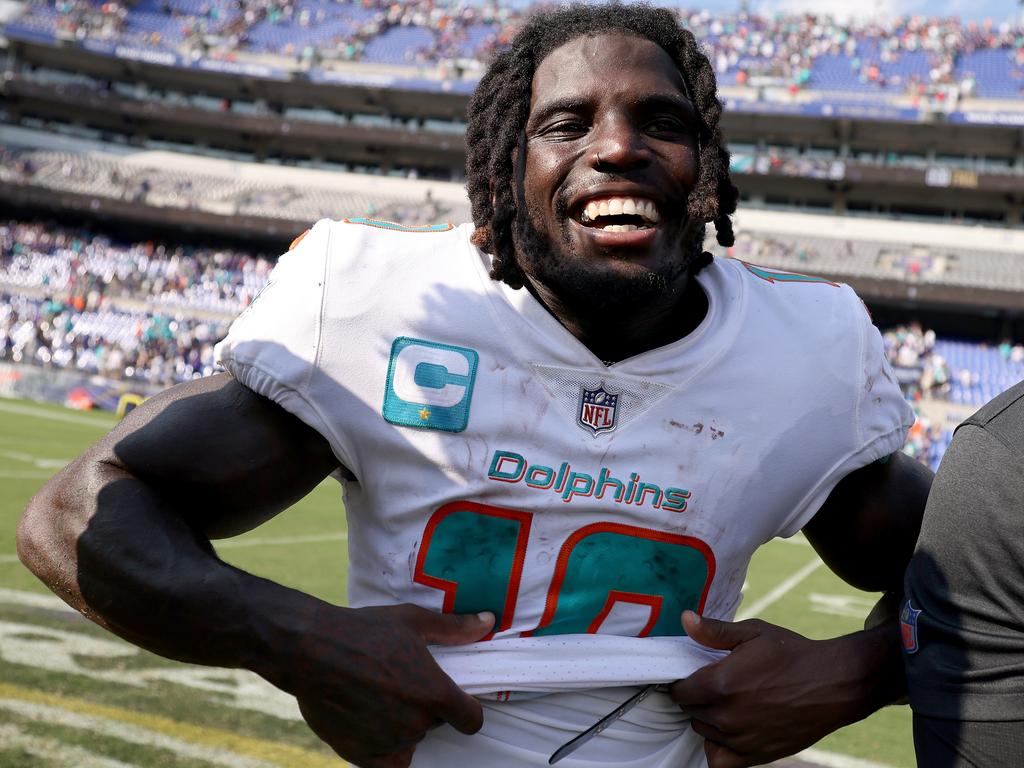
The departure of Hill still left quantifiable doubts about the Chiefs this year. According to sportsbooks, the same team that had been to four straight AFC Championship games had the same pre-season expected win total as the Raiders and Broncos, who turned out to be two of the worst teams in football.
“Most people didn’t think we’d be here this season because of that decision,” Hunt says.
What the Chiefs discovered over the course of this season was that Mahomes was so good that he didn’t need Hill. They created a new receiving corps with players who cost less than him and Mahomes elevated all of their games. Free-agent additions like JuJu Smith-Schuster and Marquez Valdes-Scantling and rookie Skyy Moore combined to form a new arsenal of passing targets, alongside longtime tight end Travis Kelce, that helped Mahomes be the most effective quarterback in the NFL.
In fact, Mahomes’s efficiency actually increased in 2022. He averaged 8.1 yards per pass attempt, up from 7.4 the prior year, while leading the NFL in both passing yards and touchdowns.
Meanwhile, the Chiefs’ defence — once their bugaboo — also improved in large part because of the Hill trade. They used both of their first round picks on defensive players, who have been stalwarts during their Super Bowl run.
Suddenly, on both sides of the ball, the Chiefs had assembled new young cores that will help keep them in contention for years to come.
The Chiefs paid Patrick Mahomes. And he’s still undervalued.

NFL rocked by superstar’s devastating injury

Injury crisis forces NFL franchise to turn to 44-year old grandfather

Halftime rappers, nightclubs: How Aussie footy lags behind US

Mahomes rescue act saves Chiefs as Colts stumble

Sydney? Brisbane? NFL’s Aussie expansion could get even bigger
