
Russia darkens Olympics’ bid for a reset after a gloomy stretch
Olympic organisers can look forward to a decade of alluring host cities in liberal democracies, with hope of a meaningful rebound in ratings. Looming over the horizon, though, is one shadow the Olympics can’t seem to escape: Russia.
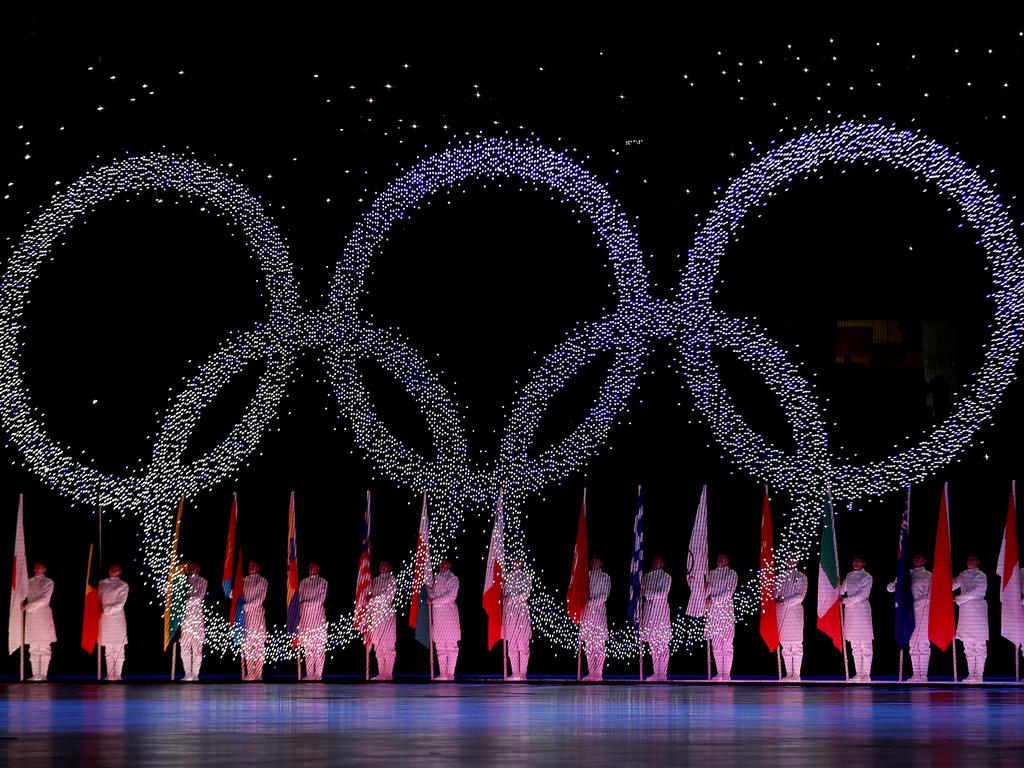
The closing ceremony of the Beijing Olympics was supposed to end one of the darkest chapters in Olympic history, a run that saw the Games travel into autocracies, slog through a pandemic and navigate nuclear posturing, all while global interest dipped to new lows.
So as Beijing handed off to Paris, which will welcome the 2024 Summer Olympics, organisers breathed a sigh of relief. They could look forward to a decade of alluring host cities in liberal democracies — the French capital, Milan and Los Angeles — combined with the ebbing pandemic and hope for a meaningful rebound in ratings.
“This can potentially be when the page turns and we’re thrilled to try to contribute to that,” said Tony Estanguet, the three-time Olympic canoeing champion who is now in charge of the Paris 2024 organising committee. “The horizon is very positive.”
Looming over the horizon, though, is one shadow the Olympics can’t seem to escape: Russia.
The country that caused organisers such embarrassing and persistent problems with doping, right up until the final day of figure skating at the Beijing Games, now endangered more than the Olympics’ hope for a rosier future. Russia was now a threat to global security.
The International Olympic Committee, which had spent years building a cozy relationship with President Vladimir Putin, decided to act, raising the possibility that athletes from Russia and its military ally, Belarus, would be banned from the Games for the foreseeable future.

For years, the organisation had stopped short of meaningful sanctions on Russia, even after an independent investigator working for the World Anti-Doping Agency found that more than 1,000 Russian athletes across more than two dozen sports had been part of a state-sponsored doping program between 2011 and 2015.
Citing a desire not to punish athletes, the IOC allowed nearly full teams of Russians to participate in every Olympic Games that followed, from 2016 to 2022. The most public penalties — a suspension of the Russian flag and anthem, along with a renaming of the team as Olympic Athletes from Russia — served only to frustrate participants from many other countries.
“There are certain countries that are — at least until now — too big and too rich to fail,” Olympic historian David Wallechinsky said of Russia. “They could pretty much get away with anything they wanted.”
The invasion of Ukraine may have changed all that. In an unusually bold move, the IOC recommended that sports federations exclude Russian and Belarusian athletes and officials from international competitions. It hasn’t yet said whether it would ban Russian or Belarusian athletes from the next Olympics, in 2024. Still, the mounting outrage against Russia from much of the international community may make it difficult for the IOC to allow Russian athletes into those Games without the risk that other nations would pull out in protest.
An IOC spokesman said the organisation is monitoring the situation with Russia and wouldn’t speculate on future developments. He said the organisation’s relationship with Russia “dramatically deteriorated following the revelations about systemic doping.” After the IOC imposed a range of sanctions against Russia “a number of top individuals at the IOC were targets of cyber-attacks and personal threats,” he added.
Officials from the Russian Olympic Committee didn’t respond to emailed questions.
Organisers, sponsors and broadcasters are now bracing for the possibility that the Olympic project will forge ahead without the country that has done more to shape competition than almost any other. Russia and its predecessor, the Soviet Union, have collected more gold medals at the Summer and Winter Games than any nation aside from the United States.
The absence of Russian athletes would be felt most in track and field, wrestling and gymnastics in the summer. That raises the prospect that coming Olympics will carry the same asterisks as the 1984 Games in Los Angeles, which were boycotted by the Soviet Union, Cuba and the former East Germany. The Soviets said they were boycotting to keep athletes safe from protests and possible physical attacks, but the move was widely viewed as retaliation for President Jimmy Carter’s withdrawal from the 1980 Games in Moscow over the Soviet invasion of Afghanistan.
In winter, Russia’s absence could entirely reshape the field in figure skating, biathlon and ice hockey.

For now, sponsors and broadcasters are putting on a brave face, counting on venue changes that make conditions away from the field of play more broadly appealing than they have been in years.
“To a certain extent, it’s magical, in that you have Paris, which is one of those incredible, iconic cities that the American audience has some connection to,” NBC Olympics President Gary Zenkel said. “I don’t know that you can have a better lineup than what we are blessed with for ’24, ’26 and ’28.”
The longtime Olympic broadcaster could use a turnaround. NBCUniversal is paying about $1.3 billion per Olympics through 2032 to broadcast the Games in the U.S., making it the IOC’s single biggest rightsholder. Ratings plummeted — down 42% between the 2018 and 2022 Winter Games alone — as the past three Olympics took place in challenging time zones in Asia and the American audience continued years of cable-TV cord-cutting.
The timing of those live broadcasts, however, was only part of the problem. The content was often just as dispiriting. Pandemic restrictions in Tokyo and Beijing reduced venues to nearly spectator-free sound stages. Most events unfolded in near silence against backdrops of empty stands. And athletes moved through what was supposed to be a career-defining celebration while instead living in constant fear of being banished to isolation after a Covid-19 positive.
Participants at the Beijing Olympics lived, ate, and competed inside a biosecure “closed loop” to prevent them from possibly contaminating the Chinese population at large. Once they finished competing, their instructions were to leave the country within 48 hours. The Games interacted so little with their local surroundings that they might as well have been held on a movie studio lot.
Organisers are desperate to reverse that trend — assuming health conditions allow — and bring back the picture-postcard side of the Games. Paris 2024 has already announced that its Opening Ceremony will put national delegations on barges floating down the Seine, right through the heart of the city.
The role of the host nation as a “co-star” of the Olympics is “going to return for Paris and Italy,” said Molly Solomon, the executive producer and president of NBC’s Olympics production.
If the host nations are the co-stars of the Games, Russia has played the recurring role of heel. The turning point came at the 2014 Winter Games in the resort city of Sochi on the Black Sea, where a state-backed doping conspiracy saw Russian athletes’ dirty urine samples secretly replaced with clean ones.
The IOC declined a recommendation by the World Anti-Doping Agency that Russia not be allowed to compete in the 2016 Rio Games, and deflected decisions about which Russian athletes should qualify for the Games to individual sport federations.
The Court of Arbitration for Sport overturned a number of sanctions against individual Russian athletes and reduced sanctions against Russia by WADA that were supported by the IOC following a Russian appeal to the court, the IOC spokesperson said.
Mr. Putin, who made athletics a central part of his campaign to restore Russian pride, has previously said the doping allegations are partly a political ploy by the West.

As frustration grew among athletes around the world with the country’s continued participation in the Olympics, another doping scandal broke out at the 2022 Beijing Games — this time, on Russia’s superstar figure-skating team.
Just ahead of the individual competition, news emerged that 15-year-old Russian Kamila Valieva, the best women’s skater in the world, had failed a drug test in December. She was allowed to compete in the Olympics under antidoping rules designed to protect athletes younger than 16 and delays in the processing of her sample. Ms. Valieva finished a surprising fourth, out of the medals, allowing the IOC to proceed with the women’s singles medals ceremony rather than suspending it pending case results.
The Russian Anti-Doping Agency is handling the Valieva case.
The Beijing Olympics skating episode was “just, frankly, disgusting because it involved a teenager,” NBC’s Ms. Solomon said.
As the skating controversy raged, Russia was moving its military into position along its border. On Feb. 24, four days after the close of the Beijing Olympics where Mr. Putin had been among the IOC’s distinguished guests, Russia invaded Ukraine.
The IOC personally named Mr. Putin in its condemnation, stripping him of an Olympic honour for his violation of the so-called Olympic Truce, in which the IOC and the United Nations make an appeal for peace before each Olympics.
Russia had previously violated it by attacking Georgia around the time of the 2008 Olympics in China and annexing Crimea before the end of the Sochi Games.
The IOC’s sterner posture on Russia is a turnaround from the situation a decade ago, when the IOC still saw the country as a valuable partner. In Mr. Putin, the organisation had found someone who was still prepared to invest lavishly in the Games at a time when few other potential hosts were. The Sochi Games cost Russia a reported $51 billion.
But those Olympics were emblematic of a larger issue in the longstanding system for selecting hosts, which saw bid committees wine and dine Olympic officials in a pricey, high-stakes courtship. As the Games expanded, host plans grew more ambitious and venue-construction costs ballooned into the billions. In many countries, that simply made the price of hosting Olympics too absurd for the public to swallow.
Oslo pulled out of bidding for the 2022 Winter Olympics after refusing to jump through the customary hoops to woo IOC members. Enthusiasm to host the Games fell so far that in the final round of voting to host the 2022 Games, Beijing’s last rival standing was Almaty, Kazakhstan.
Future hosts knew that they needed to present a radically different version of the Olympics if they were going to keep public opinion onside.
“Expectations for the Games are evolving,” said Mr. Estanguet of Paris 2024. “We have to be exemplary in the way we deliver them,” he added. “That’s why we committed to break a little bit with what’s come before.”
Mr. Estanguet was referring to Paris 2024’s decisions to fund itself almost entirely with private money instead of taxpayer funds, to reduce the Olympics’ carbon footprint by half and to build as few new venues as possible. Some 95% of the Games’ infrastructure already exists in the greater Paris area and around France.
Los Angeles, too, plans to lean exclusively on existing venues and use UCLA’s campus as the athletes’ village, meaning the city won’t have to build a single permanent facility for 2028.
The 1984 Los Angeles Games also used mostly existing venues, and emphasised commercial interests more than ever before. The approach rankled some other nations but the Games generated a more than $220 million surplus, part of which was used to create a foundation that still awards grants to youth sports. The L.A. Games also revived interest in hosting the Olympics.

Beyond the change in spending around the Games, the dwindling number of candidates also spurred a radical overhaul of the Olympic bidding process. If it formerly resembled a dating reality show, the current selection routine is more like private matchmaking. Prospective hosts quietly reach out to Olympics officials, exchange paperwork and credentials, and if they succeed, need only pass one IOC vote for final approval.
In an interview with The Wall Street Journal last year, IOC President Thomas Bach said the new bidding process achieved two major goals: “the one being, to ensure, also perception-wise, a clean and clear procedure,” he said. The second was reducing the number of bid losers — cities or countries who sometimes spent millions for naught.
The streamlined process is how Brisbane, Australia, went from the IOC’s preferred candidate to host city of the 2032 Games in just five months. The city ran unopposed.
The IOC also tweaked its procedures in 2017 for Paris and Los Angeles, which had been rivals for the 2024 slot. The organisation happily signed off on a deal that would see the two cities host consecutive Summer Games instead.
And as far as American broadcasters were concerned, the prospect of a first Olympics on U.S. soil since the 2002 Winter Games in Salt Lake City, plagued by a vote-buying scandal, were just the boost the whole enterprise needed.
Casey Wasserman, chairperson of the LA28 organising committee, notes that “You can say what you want about the ratings. The ratings still dominate TV every night for 17 nights.” He added: “I can’t think of another show that, for 17 consecutive nights, rates No. 1.”
– Wall Street Journal

From coma to champion: BMX star’s comeback finds a new track

She miscarried last week – now this brave Olympian is taking on a triathlon

1000+ athletes to benefit from revolutionary $50m retirement fund

False start as Ian Thorpe prepares for wild ride in Sydney to Hobart yacht race

‘Definitely reasonable’: Teen Olympian backs social media ban
