
Australian Open 2022: Andy Murray has returned to top 50 after debilitating injury and is adamant ‘something big’ is coming this year
Andy Murray fell more than 800 ranking places after an injury most thought was career-ending. He tells ADAM PEACOCK how he is fighting back.

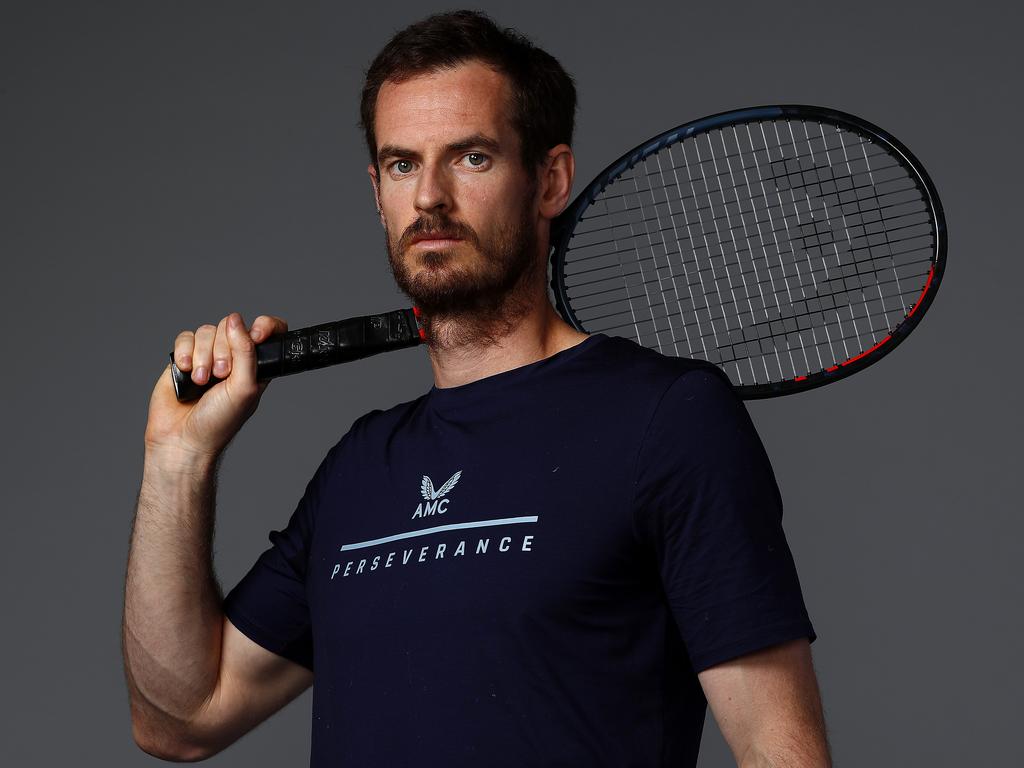
Against the fading light, Andy Murray walks onto court in Adelaide to start his 2023 season.
Wimbledon or Arthur Ashe Stadium it is not.
In fact, it is not even the main tennis cathedral in the city of churches. It’s Court One, with just three rows of seats and limited room for those standing.
The crowd has occupied every spot.
It is round one of a 250 event, the lowest level on the ATP Tour’s pyramid of tournaments, far removed from the pinnacle, where Murray has excelled for the majority of his 18 years hurtling around the world in pursuit of a little yellow ball.
On face value, Murray, 35, should be back home with his wife and four young kids. Perhaps taking up an inevitable role as a statesman, somewhere in tennis.
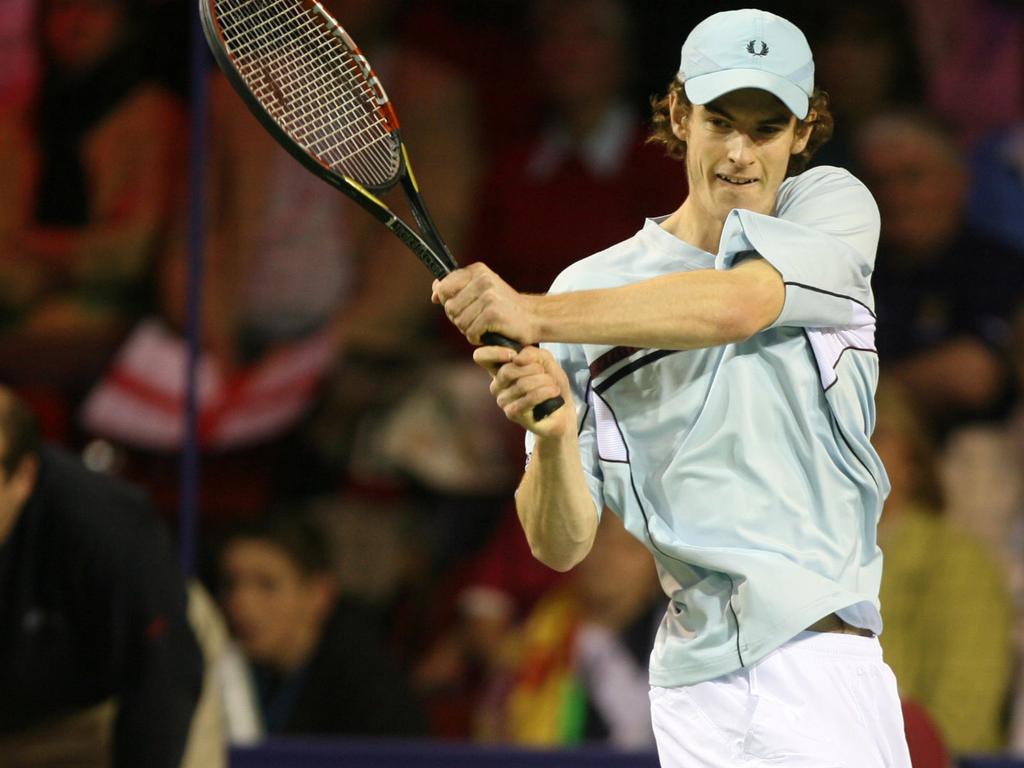
He is not in Adelaide for money. His wealth, nearly $100 million in prizemoney alone, will far outlast his time on earth. Indeed, last season, he gave all his $900,000 in prizemoney to Ukrainian children affected by war.
He is not in Adelaide for acclaim. His legacy is fixed. Three grand slam titles. Two Olympic singles gold medals. The only man to shatter the Djokovic-Federer-Nadal 18-year stranglehold on the No. 1 ranking, a stretch surely never to be repeated.
He is in Adelaide because of the competitive fire that still burns brightly in the fading light; the same drive that lifted him from a small pocket of Scotland to worldwide fame.
“I still believe there’s something big in me,” Murray tells CODE Sports.
“Nothing will replace tennis. And I still really enjoy everything about it.”

*****
In 2017, Murray was physically cooked. His right hip crumbled.
A year earlier, he had reached tennis’ summit. A good day for Murray on court was a bad day for his opponent during his climb to No. 1. A supreme athlete, Murray was impossible to hit through. Long wingspan, catlike reflexes. To quote more than one opponent: “he gave you nothing, ever.”
Then the hip went. Numerous comebacks were attempted, unsuccessfully. By 2019, retirement beckoned. The only card left to play was one no singles player had ever used: a hip ‘resurfacing’ procedure which put together the ruined joint with a rod inserted into the femur, and the joint itself coated in metal.
Apart from doubles specialist Bob Bryan, no player had tried it, much less returned to their previous level. Murray, prepared to be the science experiment, because the alternative was a retirement he wasn’t ready for, had to readjust his ambitions.

The comeback has resulted in a slow ascent back up the rankings.
He finished 2022 the 49th best men’s player in the world.
“Because I managed to get to No. 1 in the world, what ‘really good’ looks like is judged on that,” Murray says. “Making the top 50 in the world is a good effort with everything that I’ve gone through, but I still feel like I can do more than that.
“If I get to 30 in the world, a lot of people would say, ‘Well, he’s finished.’ But hardly any players who start playing tennis are able to get to that level.”
Numbers from a computer are one thing, helped by deep runs at events like Rotterdam and Washington, but where Murray truly aspires to be once more is the second week of a grand slam.
From 2011 to when his hip went in 2017, Murray made the quarterfinals or better at 24 of 26 slams.
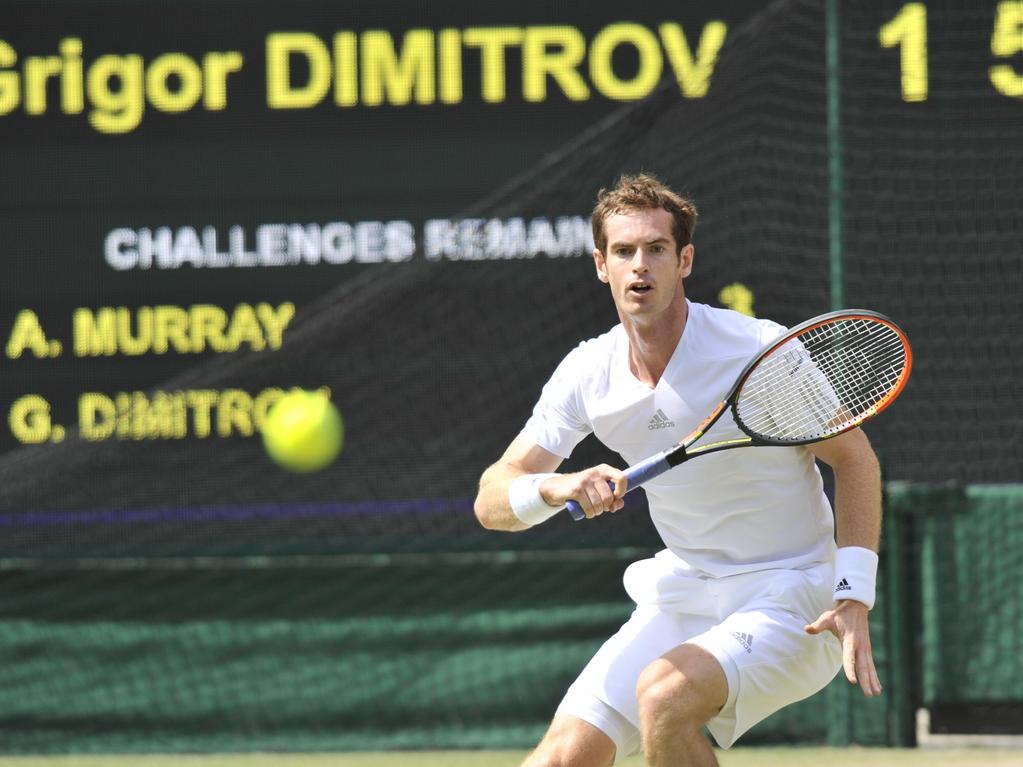
“It’s hard to say, ‘If I make the semis of the Australian Open (now) is greater than when I made the final with normal hips, when I was 25.’ Making the quarters? I don’t know.
“I want to see how far I can go with the metal hip. See what that limit is.”
Murray has prepared for 2023 by going back to what has worked previously; a hefty December training block in Florida and a reunification with coach Ivan Lendl.
“Both of us still believe in the relationship, we’ve had success,” Murray says of the coach who was with him for his three major titles at the US Open (2012) and Wimbledon (2013 and 2016). “I know the game style I need to play, and the way he wants me to go about it.”
“Providing I keep working like I have for the last six to eight weeks, maintaining that for a period of time, (good results) will be sooner rather than later.”

But for all the tunnel vision that exists inside the mind of Murray, focused on returning to tennis’ elite stages, he is also mindful of the selfishness required in his current pursuit.
“Only thing that’s become harder is being away for long stretches, away from the family,” he says. “Over here on the Qantas flight, I was chatting to an air hostess about it. She was saying her dad worked on an oil rig. Away for nine months of the year. That made me feel better!
“But it’s still not easy, my wife (Kim) has been unbelievably supportive.
“She could easily turn around to me and say, ‘What are you doing? You‘re losing in the second round of this tournament, what’s the point?’”
Murray has placed no definitive time frame on this latest comeback pursuit, although he did allude to a period of “two years” at one point during our 20-minute chat. So focused is he on the impending challenge, Murray has no clue what is waiting in the post-career afterlife.

That said, he knows what he won’t be doing.
“Commentary, I have no interest in that,” he laughs, pointing out his brief stint with the BBC in 2018 at Wimbledon. “When I did it, I didn’t really enjoy it. It’s difficult to get that balance right between being fair and analytical, without being disrespectful and creating big headlines.
“I never found it helpful when I was playing, getting questions in the media, ‘Such and such said this about you.’ These are often people you respect, and when you’re young, you take that to heart.
“It’s like when Tim Henman would say something. It gets reported as ‘Tim Henman says Andy Murray should do this’, and when you’re 21 years old, you’re like ‘F—, should I do that? Is my team telling me the wrong stuff?
“I get it, but it’s not something I really enjoyed myself.”

Murray is well-respected on tour, and not just the men’s side. He is an avid watcher and admirer of both the women’s and men’s tours, and sits near the top of rankings in regards to tennis’ most articulate athletes when it comes to addressing issues facing the sport.
A leadership role, be it coaching, or in administration, are options.
“I’m aware of what the sport has given me … I have a lot of respect for the sport because of that,” Murray says.
“There are a lot of things in my career I wish I hadn’t done and regret doing, I’m sure lots of ex-players feel that way. It can be a lonely sport at times, and when you finish playing there’s a feeling of wanting to give back, or pass your experiences on to try and make it better for the next generation.
“But, there is a part of me that just wants to be at home, time with the family too.”

*****
Post-career planning can wait for now.
Murray’s time is fully occupied attempting to make medical history.
“A lot of the doctors I spoke to about (the metal hip) thought there was no chance I’d be able to play,” he says.
So, Murray likes being an experiment?
“Yeah, just to see what the endpoint is with it,” he continues.
“I don’t know if I got back to top ten, top twenty in the world, and play right at the top of your sport again, that would be really cool. Probably not even today, there’s nobody who thinks I can play up to that level. I’d like to prove a few people wrong.”

Murray has already achieved a great deal in this chapter of his career.
His ranking dipped to a nadir of 839 in mid-2018.
A year later, he re-entered the top 250.
And by the end of 2021, he was on the cusp of the top 100.
Finals in Sydney and Stuttgart, a semi-final in Surbiton and quarter-finals in Newport and Gijon saw Murray re-enter the top 50 in the middle of 2022, which he maintained for the remainder of the year with a 26-19 record. He played eight more matches last year than in 2018, 2019 and 2020 combined.
Grand slams, inevitably, proved more difficult. Murray reached the third round at the US Open and the second rounds of the Australian Open and Wimbledon. It has been more than five years since he reached the quarter-finals of a tennis major.

Murray offers a long pause when asked whether he really thinks that “something big” - a magical run in the golden summer light of Wimbledon - is written in his future.
“If I didn’t believe I could do that, I wouldn’t just play for the sake of playing,” Murray says. “It would be quite selfish to go away from my family for seven-eight weeks if I didn’t think I could do something really good again.”
Which brings the story back to the present, and the fading light in Adelaide this week.
Big hitting American Sebastian Korda, a man 13 years Murray’s junior, is too good.
Murray, for his part, shows no physical frailties, chasing down lost causes as he always has.
He just can’t find a way through the powerful Korda.
Murray trudged off, under the considerable weight of his bulky tennis bag.
His mind, frustrated, but belief unwavering.
Still believing, even as the twilight approaches.

‘Very lonely mission’: The price of being a teen tennis star
Read more

Federer to return to Aus Open for ‘battle of the World No.1s’
Read more

Ultimate wildcard: Mystery still surrounds Kyrgios AO plans
Read more

Titmus sought out Barty for advice on early retirement
Read more

Demon’s vow after taking out top tennis honour for fourth time
Read more

Pregnant ace’s frock stuns at Crown… but who ghosted the red carpet?
Read more