
The most influential people in Australian tennis history, Part II: The ‘nicest man’ in tennis and Ash Barty’s influence
Dylan Alcott, Lleyton Hewitt and Ash Barty are some of the figures who are impacting Australian society even after putting down their racquet. RICHARD EVANS counts down to the No.1 most influential Australian in tennis history.
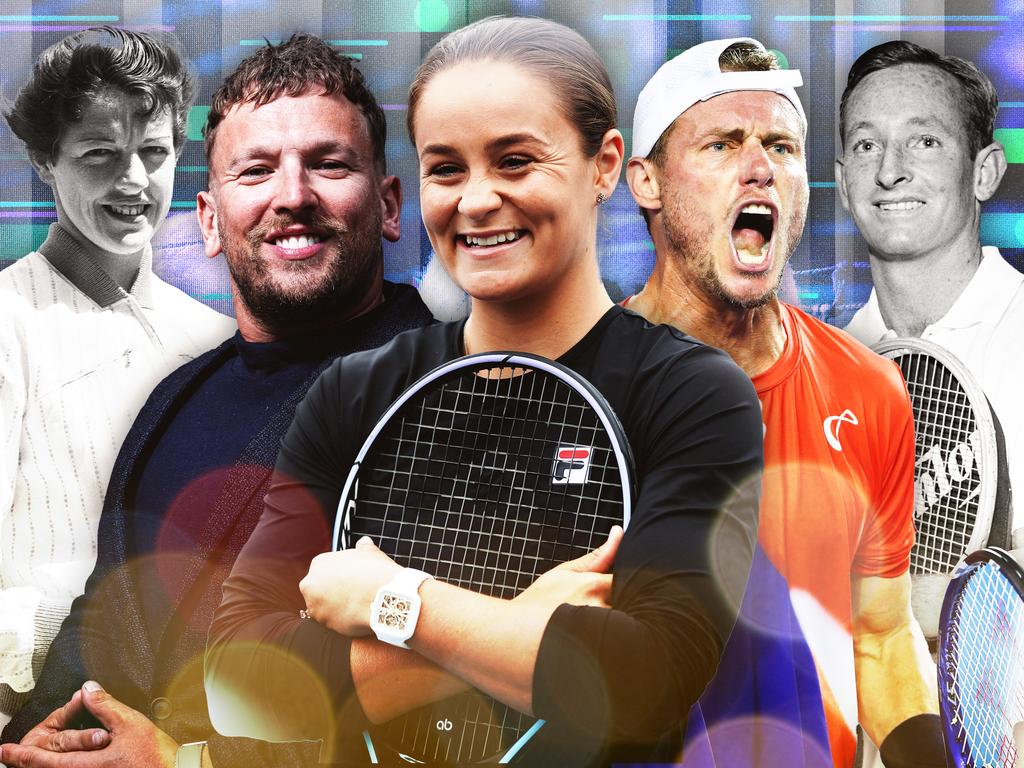
The Australian tennis top 50 is not about the best players, but who has contributed most to the sport and its landscape over the past century or so. How influential each person was in their era is a true measure of their worth.
Adelaide’s Peter Smith was a state level player at best but coached three future Davis Cup captains. How do you beat that?
Well, remarkably, many do and that’s the beauty of this ladder. There are women out there who have 18, 19, 20 titles at the majors – the grand slams – yet will be unknown to today’s tennis fans. Check out Thelma Coyne Long or Nancye Smith Bolton. Then there’s Adrian Quist, a serial doubles winner who also bagged eight Davis Cups.
The countdown to number one features surprises and superstars. Here’s Part II of CODE’s 50 most influential Australians in tennis.
25-1
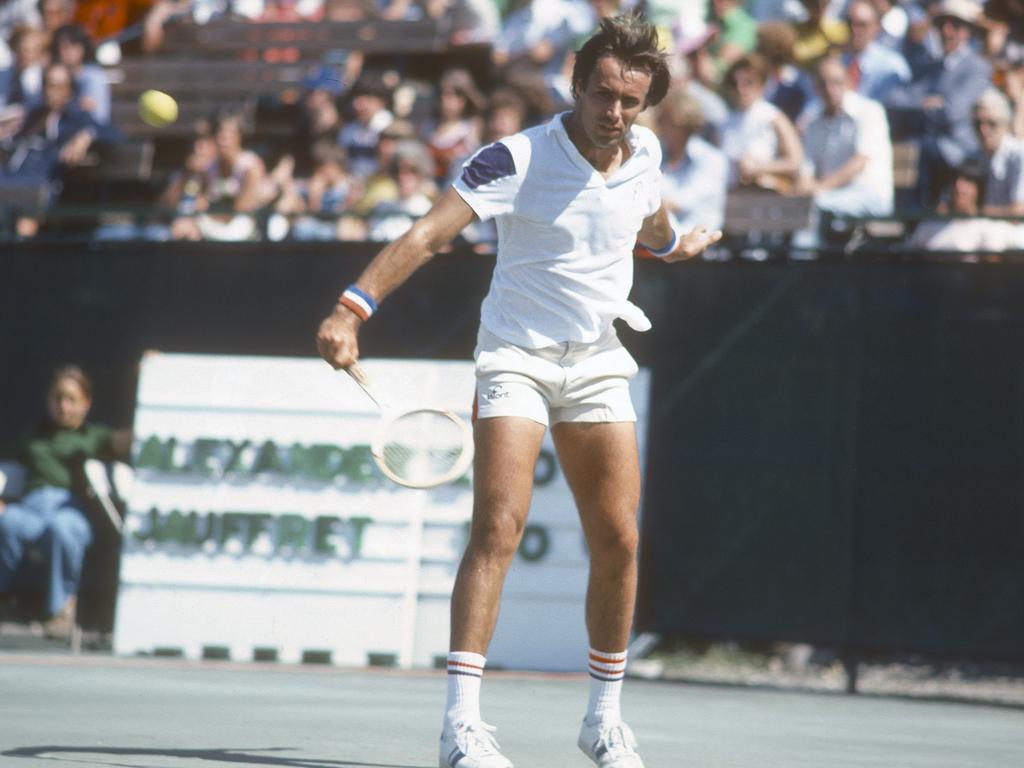
25. John Alexander
A world top 10 singles ranking, the youngest player to play Davis Cup for Australia (a winning team member in 1977), a Fed Cup captain and a couple of Australian Open doubles titles is good going, but JA really came into his own after he put down his racquet. Best-known more recently as a high ranking Liberal party politician, he spent 15 years in America running a tennis and health club empire for entrepreneur Lamar Hunt before teaming up with Britain’s David Lloyd to set up the Next Generation Clubs across Australia.
24. Norman Brookes
The oldest entrant here, Brookes won Wimbledon twice and the Australian Championships before World War I as well as bagging six Davis Cups and a knighthood. A stickler for the rules – after failing to persuade Sedgman not to turn pro in 1952, he never spoke to his star player again – the autocratic Brookes became the first president of the Lawn Tennis Association of Australia in 1926 and hung onto it for the next 29 years. Lives on through the Australian Open men’s singles trophy which is named after him.
23. Peter Smith
Smith’s coaching was central to the formative years of three Davis Cup captains – Lleyton Hewitt, John Fitzgerald and Peter Carter (Switzerland) – yet there is far more to the self-taught, state level South Australian player. Cahill, Mark Woodforde, Roger Rasheed and Brod Dyke also emerged under Smith’s tutelage in Adelaide. He kicked off the first state tennis championships for disabled players in 1999 and took the first ever intellectually disabled Australian team to Europe in 2000. An integral part of the Ken McGregor Foundation which supports people with a disability. Parkinson’s disease has cut back his coaching but he remains an active and formidable fount of knowledge and encouragement. The guru.

22. Fred Stolle
Another with an extraordinary haul of major titles (18). Lost his first five singles finals in the majors before clinching the French and US singles crowns. He coached team tennis successfully in the US before hooking up as coach with everyone’s favourite American at the time, Vitas Gerulaitis, for six years. Three Davis Cup wins and father of Davis Cup player Sandon, Stolle was a TV commentary staple for years post-playing.
21. Judy Tegart Dalton
Dalton won the doubles at all the majors (nine in total), tagging up with Margaret Court to win five. A robust player, she was part of two Federation Cup-winning sides. But Dalton makes this list due to her part in revolutionising women’s tennis as one of nine top players who broke away from the game’s governing body to set up the Virginia Slims tour, the precursor to the WTA, in 1970. It changed tennis forever and was the true battle of the sexes. Picked up an OAM in 2019 for “significant service to tennis as a player, to equality for women in sport, and to sporting foundations”. (An honourable mention must go to Mosman’s Kerry Melville Reid, another of the original nine breakaway players and 1977 Australian Open singles champion.)

20. Brad Drewett
A decent if unspectacular player, Drewett came into his own as an administrator, becoming executive chairman of the ATP in 2012. Tellingly he united the world’s players when negotiating significant prize money increases for lower-ranked tour members at the four majors. When he died in Sydney of motor neurone disease aged just 54 in 2013, the tributes were overwhelming. A memorial brass bust of Drewett in Melbourne Park reads: “A top 40 player, Australian Davis Cup representative, ATP Executive Chairman and President, Brad left an indelible mark on the sport he loved, ensuring our great game was in a better place than he found it.”
19. Darren Cahill
A first-rate singles player like his dad John (a former Port Adelaide footy boss), ‘Killer’ came into his own as an innovative and heavily in-demand coach, making Lleyton Hewitt US Open champ and the youngest-ever world No.1. Next up came Andre Agassi, who he made the oldest player to be ranked the world’s best. A long-term coach of Wimbledon champion and former world No. 1 Simona Halep, Cahill has helped out Andy Murray among numerous other top players. A sports nut, no detail is left unturned and he is a high profile TV commentator too. Sits on the board of Port Adelaide FC and is a former co-owner of a Las Vegas nightclub with Agassi and Steffi Graf.

18. Dylan Alcott
An extraordinary 23 major titles (15 singles and eight doubles) has come about in the blink of an eye for the now retired 32-year-old wheelchair player. Off-court, the blossoming of the Alcott profile has been astonishing. He’s a TV pundit, author (his autobiography is ‘Able’), motivational speaker and star of endearing TV ads. Is there anything he can’t do? No, and that’s his point. Exuberant, in your face and popular, Alcott believes in himself and has thrust disability sports into the mainstream.
17. Pat Rafter
The nicest man in tennis? ‘Saint Pat’ gave everything for his country in particular and was an inspiration to a young Lleyton Hewitt when he first made the Davis Cup squad. Famously, world No.1 for one week only, in 1999, his greatest exploits came outside Australia, winning the US Open in 1997 and ’98. He was the other man in perhaps the most raucous and famous Wimbledon final of them all, losing to Goran Ivanisevic in 2001. Keeps to himself at home with his large family in remote Queensland. Davis Cup winner in 1999 and four years as captain, he carried Australian tennis between Cash and Hewitt.

16. Jack Crawford
The first true global Aussie great, ‘Gentleman Jack’ from country NSW so nearly became the first player anywhere to win a grand slam, just one set away at the 1933 US Open before collapsing to England’s Fred Perry. Still, he was a remarkable achiever, six majors in singles plus 11 in doubles and eight Davis Cups, a competition he gave everything to. Appeared in 10 consecutive majors singles finals. A stylish, fluent player who played with a triangular racquet.
15. Roy Emerson
The men’s majors leader for years, the athletic ‘Emmo’ won all four singles majors at least twice, 12 all up plus 16 doubles titles. A country kid from Blackbutt in Queensland, he beat everyone but couldn’t afford to turn pro so good were the under the table handouts at amateur tournaments, he says. His astonishing eight Davis Cup wins suggest that he loved the amateur game, too. Not in the limelight much now albeit engaging and courteous, Emerson was the best amateur player anywhere in the 1960s. Our hidden gem.

14. Pat Cash
A genuine icon, the 1987 Wimbledon champion has a playing and fashion sense rooted in that decade and despite just one major title, dominated Australian tennis for nearly all his playing days. Loyal to a fault, he had long-standing feuds with Lendl and Newcombe and gave everything for his country when it came to the Davis Cup, winning it twice. Contested the last singles final at Kooyong in 1987 and the first at Melbourne Park a year later. An unswerving analyst, Cash doesn’t fit in any one camp but is great value.

13. Craig Tiley
South African born, the current Tennis Australia chief exec has taken the sport’s infrastructure nationally to new levels, rebuilding the Melbourne Park HQ and consolidating the Australian Open as a major force in the southern hemisphere. Inclusivity and building Australian tennis’ financial independence are key to a man who spent years as a player and reputable coach in the US. Integral to establishing the inaugural ATP Cup in Australia and its 2023 replacement the United Cup. A largely hidden presence at last year’s AO following the Novak Djokovic debacle, the man with the vice-like grip on Australian tennis makes our AFL administrators look like kindergarten perennials.
12. Ash Barty
Despite her shock retirement last April, Barty remains at the fore of Australian tennis. Just 26, she has quite a backstory; junior Wimbledon champ, dropping out of the game to play cricket professionally, the return and remarkable ascent, bagging the French Open, Wimbledon and, finally, the Australian Open singles crown last January. Never the player with the biggest game, but arguably the cleverest. Her recent autobiography My Dream Time points to the good works she wants to, and can, achieve within Australia’s Indigenous communities. There have been flashier and more accomplished players but Barty, likeable and with the flourish of youth still, can surpass them all off-court. A great second career beckons.

11. Lew Hoad
Maybe Australia’s best player ever. An Adonis who died aged 59 while living in Spain where he ran tennis camps and where Hollywood flocked to his door, Sean Connery and Kirk Douglas arriving for lessons and drinks. Only his doubles partner, Rosewall, stopped Hoad from completing a 1956 grand slam, beating him in the US final, and together they led the second brigade of Aussies to dominate world tennis post WWII. Lesser known now but immense in his day, beer and laughs to the fore, he helped build and kindle the Aussie macho image and Dunlop named a racquet after him. Another top player – 13 doubles majors and four Davis Cups.

10. Lleyton Hewitt
US singles champion at just 20 and Wimbledon winner 10 months later, the never-say-die Hewitt remained the youngest-ever world No.1 male until Carlos Alcaraz upstaged him last September. But it’s his dominance of the sport in Australia that propels the Davis Cup captain up this list. His turnaround of the culture in the Davis Cup team is absolute. Took eight weeks off playing to prepare for the 2003 Davis Cup final in Melbourne such is his love of country. A mix of the loyal and divisive always – his determination can tilt towards the abrasive – he is, even with the advent of Ash Barty and Nick Kyrgios, the most important person in Australian tennis right now.

9. Ken Rosewall
‘Muscles’ (he didn’t have any, hence the tag) was not yet at the peak of his playing powers when he turned professional in late 1956. Indefatigable and stylish, no player missed out on more honours by joining the money-paying circuit. Think Usain Bolt barred from the Olympics on account of his bank balance. Yet the diminutive Rosewall still snaffled eight major singles titles and played in Wimbledon singles finals 20 years apart (1954 and ’74) and, in tandem with Laver, was the finest player of the 1960s.

8. Frank Sedgman
The world’s No.1 player when he joined the outcast Jack Kramer’s professional ranks in January 1953, Sedg raised the bar on-court and had little time for the old smothering amateur officialdom off it. Hopman revered him so much that he held a public money raising campaign to buy Melbourne’s finest a petrol station in 1951 to keep Sedgman in the amateur game for another 12 months. He left with five singles majors and 17 doubles titles and three Davis Cups. Paid $100,000 in 1953 on his first professional tour of the US, he later coached Margaret Court and, at 94, is the grand old man of Australian and (arguably) world tennis.

7. Neale Fraser
You might pass the 89-year-old Fraser unwittingly in the street these days but three singles majors, 16 doubles titles and 24 years as a four-time winning Davis Cup coach from 1970 make for an enormous contribution. His playing record is exceptional but the defining image of the flat hitting lefty is courtside, sat in his age old lounge chair, urging his boys to another Davis Cup triumph. Drove Aussie tennis forward as effectively as Hopman but with a wholesale, more endearingly Aussie leadership.

6. John Newcombe
The much higher-profile thrust of the Newcombe and Roche doubles partnership, the Sydney-slicker timed his career well, arriving just after Laver and Rosewall and before the Borg/Connors dominance of the 1970s. Seven singles majors (he won Wimbledon and the US Championships/Open as an amateur and pro), five Davis Cups, Davis Cup captain and 20 doubles majors puts him at the top end of any sports listing. And the annual Newcombe Medal keeps his name in the spotlight, as if he didn’t need it. A man long known by his moniker only, Newk is the consummate big name, big personality who has made friends – former US president George W. Bush among them – with ease and had a few dust-ups along the way.

5. Tony Roche
In Melbourne three years ago, the great and good of Australian tennis gathered to pay tribute to Roche. The then 74-year-old, uncomfortable in the spotlight, listened as Newcombe, Lleyton Hewitt and Pat Rafter verged on the tearful in their public admiration of the man from Tarcutta. His honours call is sublime – one French Open singles, 15 doubles slams, four Davis Cups and he coached Ivan Lendl, Rafter and Federer to major titles. A mentor and coach still, he remains part of the Australian Davis Cup set up, implacably directing practice sessions from the back of the court.

4. Evonne Goolagong
Seven singles majors and three Fed Cups, an Indigenous ambassador, the girl from sheep farming NSW swept up the Wimbledon title at just 19 years old, her idol Margaret Court the beaten finalist. It was the way Goolagong won though that captured the eye and heart, a lithe grace blinding opponents and the public to a formidable strength of body and mind. Arguably could have been better used post-playing days, but that would require an ongoing desire for the spotlight. An accurate playing comparison might be the weightless movement of McEnroe. Trailblazing.

3. Harry Hopman
Would Australia have leapt to the apex of world tennis and stayed there for decades if it wasn’t for the small dapper coach from inner Sydney? Hopman, a single-minded autocrat who was viewed with some distrust by tennis authorities, worked his players to the bone in his 28 years at the helm of Aussie tennis from 1938. Yet Laver, Frank Sedgman, Lew Hoad, Ken Rosewall and more all owe him a great debt. Not universally liked, the former first-rate doubles player (he won seven majors) and tennis obsessive was much respected and, curiously, coached a young John McEnroe for good measure in later life. Led Australia to 16 Davis Cups as captain.

2. Margaret Court
A chart-topping 62 titles at the majors is mind-boggling (Ash Barty has four). Like Martina Navratilova and Serena Williams later, the Aussie Amazon took the physical side of women’s tennis to new peaks and reshaped the sport. Sidelined by Tennis Australia on her own grand slam 50th anniversary due to her rigid religious views, she polarises opinion yet the question of what to do with Margaret is avoided, more than addressed. World famous, her record 24 singles titles at the majors (three as a mother) gnaws away at her detractors. Staggeringly she won 192 titles. Australia’s greatest ever sportsperson? Like her or not, there is a very strong case.

1. Rod Laver
The 84-year-old has one of the world’s best stadiums named after him and remains relevant globally especially after his 50 year grand slam anniversary tour in 2019 that, at times, looked like it might run as long as his career. While younger generations won’t know much about his exploits, everyone knows his name. Missed out on six years playing the majors when he turned pro, Laver’s two grand slams in 1962 and 1969 sealed his reputation yet the Rockhampton Rocket who learned the game on an ant bed court as a child, is as much about flair and decency as titles. Has lived in California for 50 years and is adored by other legends, Roger Federer and John McEnroe to the fore.


‘Very lonely mission’: The price of being a teen tennis star

Federer to return to Aus Open for ‘battle of the World No.1s’

Ultimate wildcard: Mystery still surrounds Kyrgios AO plans

Titmus sought out Barty for advice on early retirement

Demon’s vow after taking out top tennis honour for fourth time
